Thank you for Subscribing to Medical Care Review Weekly Brief
Medical Care Review: Specials Magazine

Talkspace
Making Anxiety and Depression Care Reachable Online
Anxiety and depression can make the process of seeking care feel difficult from the very beginning. For many, the first obstacle is not the willingness to seek care but finding a suitable provider, arranging time away from daily responsibilities, traveling to appointments and staying connected between sessions. When symptoms already affect concentration, sleep, work or social interaction, those steps can feel heavier than they look from the outside. Talkspace approaches these challenges through a virtual care model built around licensed therapy, psychiatry, messaging and medication management when appropriate. Its anxiety and depression treatment model points to a pathway that begins with matching or consultation, then moves toward diagnosis, a personalized treatment plan and continued care through online therapy or psychiatric services. The model is trying to make mental health care access less dependent on office logistics. That distinction is important for virtual anxiety and depression treatment. The value of online care does not come from moving a conversation to a screen. It comes from reducing the distance between symptom recognition, provider connection and ongoing treatment. For people managing generalized anxiety, social anxiety or depression, that continuity can matter as much as the first appointment. “Being recognized by Medical Care Review validates Talkspace’s core mission: making high-quality mental healthcare accessible to everyone, especially those facing anxiety and depression. Our deep foundation of clinical data drives our product innovation and equips clinicians with the tools for early symptom identification. This allows us to more accurately diagnose, efficiently connect members to support, and ultimately help them reclaim their lives,” says Nikole Benders-Hadi, M.D. Chief Medical Officer.

Mental Health
The Flatiron Center for Psychotherapy
Person-Centered Depression Treatment
Dr. Sean Condon, Founder & Clinical Director
What factors shape how depression is experienced and treated across different individuals today? “We don’t treat depression per se, we treat the person suffering from depression,” says Dr. Sean Condon, Founder and Clinical Director of The Flatiron Center for Psychotherapy (TFC). Not all depression is the same. In fact, each of us may experience and express depressive symptoms differently. TFC tailors treatment by integrating mind, body and evidence-based care into an approach shaped around each individual’s unique psychological needs. For instance, some depressed patients report feelings of worthlessness and inadequacy. Since such self-perceptions stem from cycles of negative thinking, Cognitive Behavioral Therapy (CBT) is an excellent approach for such clients, helping them to identify these patterns and developing healthier ways of responding. In contrast, other patients may struggle with deep and longstanding sadness, and need help processing old feelings of loss. Still other patients report significant changes in sleep, appetite and energy levels, and may benefit from a trial of antidepressants. Different symptom presentations also inform the timing of therapeutic interventions. For example, some patients respond immediately to mindfulness-based interventions, while others need more structured and supportive approaches first.

Physical Therapy

Pierce ABA
Coordinating Therapy, Education and Family Support for Early Development
Dr. Tiva Kermode, Owner
Families navigating Autism Spectrum Disorder often face fragmented care, where therapy, education and medical services operate in isolation. This lack of coordination can limit progress, leaving parents to manage multiple providers while trying to ensure their child receives consistent and effective support. Pierce ABA addresses this challenge by adopting a holistic, family-centered approach that treats the child within the context of the entire family unit. Its model emphasizes coordination, education and targeted intervention to support both developmental progress and long-term outcomes. “We move beyond treating isolated symptoms, choosing instead to view and serve each child as a whole individual within the context of their family unit,” says Dr. Tiva Kermode, owner. Empowering Families through Education and Coordination A key challenge for families is navigating complex educational systems while advocating for appropriate services. Pierce ABA places strong emphasis on educating parents about Individualized Education Program processes, ensuring they understand legal frameworks and can actively participate in planning decisions. The organization also plays an active advocacy role, supporting families in discussions with school systems to secure appropriate services. This combination of education and advocacy enables parents to engage confidently and make informed decisions about their child’s development. Coordination across multiple providers is another critical need. Pierce ABA creates structured roadmaps for each family, ensuring communication between pediatricians, occupational therapists, speech-language pathologists and school personnel. This approach aligns all services toward shared goals and reduces fragmentation in care delivery.
Mental Health
Bodywise Physical Therapy
Precision-Led Physical Therapy with Measurable Outcomes
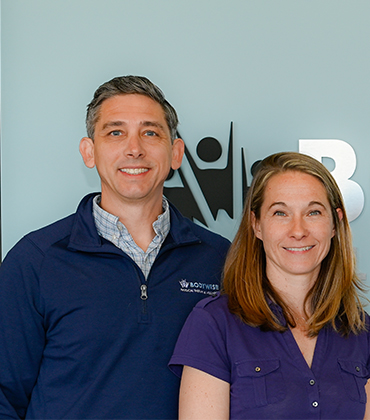
Ryan Poplaski and Karen Poplaski, Owner
What factors contribute to long-term recovery and measurable outcomes in modern physical therapy today? Bodywise was established nearly two decades ago in response to a growing shift in physical therapy, where too often, care became driven by volume instead of the patient. From the beginning, the mission has been clear: deliver structured, results-focused therapy that helps people move past temporary symptom relief and achieve lasting recovery. As a fully independent practice, Bodywise is able to prioritize the patient experience and long-term outcomes, rather than designing care around throughput. “We believe recovery is not complete when pain disappears, but when patients confidently return to the activities that define their lives,” says Ryan Poplaski, Owner. A key part of that standard is Bodywise’s one-patient, one-therapist approach. Each visit is fully one-on-one, actively supervised, and adjusted in real time based on how the patient is progressing. Treatment is built to maximize value—respecting the patient’s time, effort, and goals—while ensuring the plan stays precise and responsive. Rather than following a fixed template, care evolves from session to session so progress remains measurable and meaningful.
Pediatric Care

Behavioral Care Center of New Jersey
Where Compassion Meets Precision
Erica Lander Miller PsyD, Founder and Clinical Director
A quiet shift is taking place in behavioral health that recognizes therapy is most effective when clinical expertise is paired with genuine human connection. Many individuals begin therapy feeling emotionally overwhelmed, caught in cycles of conflict, or gradually withdrawing from parts of life that once felt manageable, leaving their world increasingly restricted. In this state, meaningful progress depends on a compassionate, non-judgmental space where trust can develop, allowing individuals to engage more openly, while evidence-based, cutting-edge approaches help translate that trust into measurable change. Behavioral Care Center of New Jersey stands at this intersection, supporting individuals in regulating emotions, strengthening relationships and moving toward goals that once felt out of reach. It serves a wide range of clients across different stages of life, supported by a diverse team with varied clinical expertise to address complex needs with precision and compassion. “We prioritize building strong, non-judgmental relationships with our clients, grounded in compassion and understanding. These form the foundation of our work and shape how we support each individual in achieving sustainable improvement,” says Erica Lander Miller PsyD, founder and clinical director. Building Trust as the Foundation for Change Therapy at Behavioral Care Center of New Jersey begins long before techniques come into play. Each client starts with a structured intake and assessment process that evaluates their age, symptoms, history, and goals to ensure that the selected therapy matches their needs. Dialectical Behavior Therapy (DBT) supports those who struggle with intense emotions and unstable relationships, while Cognitive Behavioral Therapy (CBT) provides a broader framework for addressing patterns of thought and behavior. This outcomes-driven approach contributed to the practice being recognized as the Top Cognitive Behavioral Therapy Practice for 2026, reflecting the progress clients achieve through these methods. The same disciplined approach extends across other treatments, where Parent-Child Interaction Therapy (PCIT) addresses behavioral challenges in young children through guided family involvement, and targeted interventions like Exposure Response Prevention for obsessive compulsive disorder, interoceptive exposure for panic disorder, and Acceptance and Commitment Therapy (ACT) for generalized anxiety ensure that each condition is treated with research-supported method.
Speech Therapy
Advanced Therapy & Wellness Center
Looking Beyond Symptoms through Whole-Person Care
Margaret Stoch, Founder
Speech, feeding, swallowing, and sleep concerns rarely occur in isolation for children or adults. These symptoms often reflect deeper patterns involving oral function, airway development, breathing, and the nervous system that must be understood before lasting progress can occur. At Advanced Therapy & Wellness Center, evaluations are designed to uncover how these systems interact and influence one another across development, shaping both daily function and long-term outcomes. Rather than viewing symptoms in isolation, the clinic evaluates the broader system behind them before creating a treatment plan. It begins by understanding how feeding, sleep, sensory regulation, and daily routines are developing in children, with breathing as a central system that influences overall function. For adults, care focuses on safe swallowing, voice, fatigue, posture, and long-standing oral and facial muscle patterns. “Our goal is not to give families a label, but to help them understand what is happening, why it matters, and what steps can truly improve function,” says Margaret Stoch, founder That approach remains central to Advanced Therapy & Wellness Center’s philosophy. Stoch and her team spend significant time guiding patients and families through the clinical reasoning behind each recommendation, particularly when discussing complex clinical concepts. The process starts before a patient enters the clinic. Extensive intake forms gather information on developmental background and symptoms that may be contributing to current difficulties. Once on-site, patients undergo comprehensive two-hour evaluations that assess both structure and function. The team combines detailed history and clinical observation to support clinical decision-making.

Top Adult Speech Therapy Clinic 2026

Speech Pathology Solutions
Restoring Everyday Function through Adult Speech Therapy
Kristy Pantano, Owner
Recovery in adult speech therapy is often structured around treating individual symptoms. Speech, swallowing and cognition may be addressed separately, even when patients experience them as a combined loss of independence. Speech Pathology Solutions treats these changes as interconnected, focusing on how they affect a patient’s ability to function in everyday life. The practice positions quality of life as the defining measure of recovery. Rather than isolating clinical issues, care begins by understanding how those changes affect daily routines, social interaction and independence. Treatment is then designed around these real-life impacts. Therapy may involve improving swallowing safety, strengthening communication or supporting patients as they re-engage with daily activities. The practice also incorporates specialized approaches such as LSVT, SPEAK OUT!, VitalStim and orofacial myofunctional therapy, with each intervention aligned to functional outcomes rather than isolated clinical measures. “With us, they’re not just seeing a speech therapist. They’re seeing somebody who is a teammate, in meeting their goals and improving their quality of life,” says Kristy Pantano, M.A. CCC-SLP- Owner/ Speech Language Pathologist. That process is built not only on clinical evaluation but on trust. Patients often arrive feeling uncertain or vulnerable about changes they cannot fully control. Creating a warm, respectful and reassuring environment becomes part of the therapeutic process, helping them feel supported as they adapt to a new normal.
Addiction Treatment
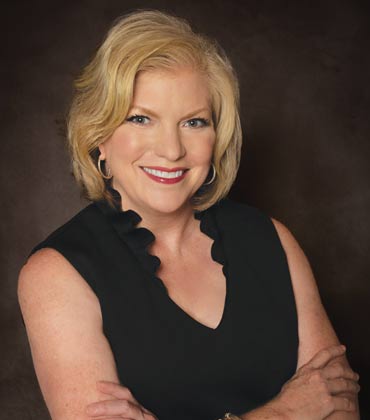
Destigmatizing Mental Health in Healthcare Space
Anne Mary K. Montero, Medical Director, Indiana University Health
Addiction Treatment

Cognitive-Behavioral Therapy for Anxiety Disorders
David F. Tolin, Ph.D., Director, Anxiety Disorders Center and Center for Cognitive Behavioral Therapy, Institute of Living, Hartford Hospital
Dermatology
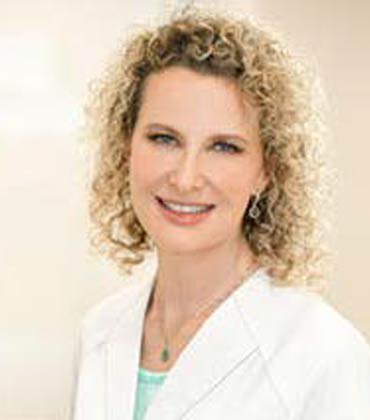
The Key to Achieving Healthy and Youthful Skin
Marianna Blyumin-Karasik, Dermatologist, Precision Skin Institute
Mental Health
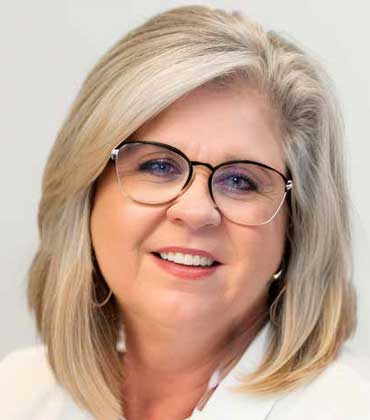
Transforming Mental Health through EMDR Therapy: A Leader's Perspective
Eileen Borski, LPC, Mental Health Counselor, Spring Health
Pediatric Care

Building a Pediatric Rehabilitation and Habilitation Community
Christopher Joseph, Director of Physical Therapy, Kennedy Krieger Institute
Plastic Surgery

Distraction in Digital Therapy
Beverly Wertheimer, PsyD, DMin, LCSW, Psychotherapist-Adolescent and Family Mental Health, Clinical Advisory Board Member, Daybreak Health
Dental Care

Rethinking Pediatric Dentistry Through Prevention and Culture
Dr. Colin Boswell, Co-Owner, Dr. Jonny Norris, President, and Samuel C., Communications Manager, Montshire Pediatric Dentistry
Care Services

Psychology Behind Successful People
Yong Wen, Chairman of Dept of Medicine, St. Luke’s Cornwall Hospital
Dental Care

Delivering Growth, Collaboration And Innovation Tactics For Nursing
Imana Mo Minard, Director of Nursing, Corewell Health

IN MY OPINION
Dental Care
Changes in Healthcare Leadership: Progress and areas for Improvement
Tylar Chappell-Johnson, Physical Therapy Outpatient Clinic Manager, Luminis Health

LAST WORD
Dental Care
Speed Systems and the Future of Stroke Care
Eric Goldstein, Co-Director Henry Ford Macomb Stroke Program, Neurohospitalist | Senior Staff Physician, Henry Ford Health
IN FOCUS

Empowering Patients: Essential Preparations for Vascular Surgery
Patients should understand procedures, risks, recovery, and lifestyle changes before vascular surgery to ensure safer outcomes and improved long-term health.
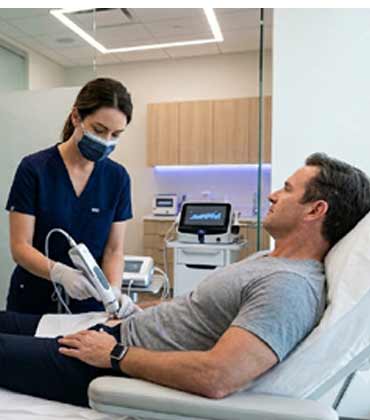
Bioidentical Hormone Pellet Therapy Advancing Personalized Wellness Innovation
Advanced technologies and innovative solutions are improving bioidentical hormone pellet therapy through personalized treatment, digital monitoring and wellness integration.
EDITORIAL
Expanding Access to Personalized Care
Healthcare is becoming more focused on accessibility and individual patient needs. As expectations evolve, providers are finding better ways to improve outcomes and support patients. This issue of Medical Care Review showcases organizations leading that effort.
Featured as the cover story in this issue, Talkspace is recognized as the Top Virtual Anxiety & Depression Treatment Provider 2026. The company has improved access to therapy by using its virtual model to provide licensed therapy, psychiatry, messaging and medication services within a single platform. By reducing barriers related to scheduling, location and provider availability, the company helps individuals connect with care and remain engaged throughout their treatment journey.
Other organizations recognized in this edition address a wide range of patient needs as well. Advanced Therapy & Wellness Center, recognized as the Top Orofacial Myofunctional Disorder Therapy Clinic 2026, begins care with understanding the broader factors that affect speech, feeding, swallowing and breathing. Behavioral Care Center of New Jersey, recognized as the Top Cognitive Behavioral Therapy Practice 2026, helps individuals build practical skills while fostering meaningful therapeutic relationships. Bodywise Physical Therapy of Epping & Stratham, recognized as the Top Physical Therapy Practice 2026, emphasizes one-on-one treatment and measurable recovery. Independence and quality of life remain central at Speech Pathology Solutions, recognized as Top Adult Speech Therapy Clinic 2026. A personalized approach guides care at The Flatiron Center for Psychotherapy, recognized as the Top Depression Therapy Clinic 2026, while Pierce ABA, recognized as the Top Children Applied Behavior Analysis Therapy Clinic 2026, works closely with families to support early development and school readiness.
Clinical perspectives featured in this edition further expand the discussion. Marianna Blyumin-Karasik, Dermatologist at Precision Skin Institute, shares the importance of prevention, restoration and lifestyle balance in supporting long-term skin health. Eileen Borski, LPC, Mental Health Counselor at Spring Health, discusses how EMDR therapy can help individuals address trauma, anxiety and emotional distress by focusing on underlying causes.
Together, these organizations and healthcare leaders demonstrate how accessible, personalized and evidence-based care continues to improve patient outcomes across a wide range of patient needs.
