
Thank you for Subscribing to Medical Care Review Weekly Brief


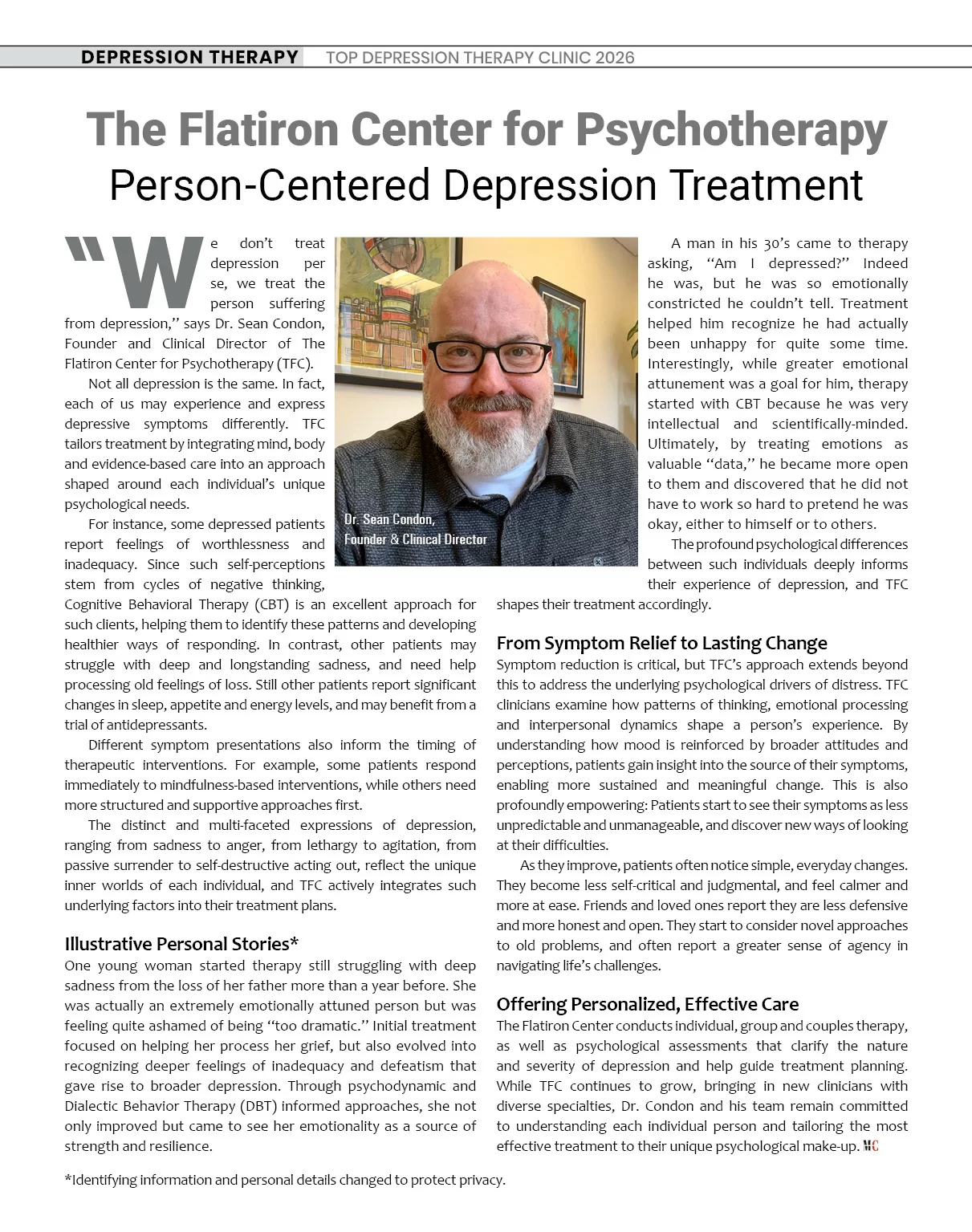
 Dr. Sean Condon, Founder & Clinical Director
What factors shape how depression is experienced and treated across different individuals today?
“We don’t treat depression per se, we treat the person suffering from depression,” says Dr. Sean Condon, Founder and Clinical Director of The Flatiron Center for Psychotherapy (TFC).
Not all depression is the same. In fact, each of us may experience and express depressive symptoms differently. TFC tailors treatment by integrating mind, body and evidence-based care into an approach shaped around each individual’s unique psychological needs.
For instance, some depressed patients report feelings of worthlessness and inadequacy. Since such self-perceptions stem from cycles of negative thinking, Cognitive Behavioral Therapy (CBT) is an excellent approach for such clients, helping them to identify these patterns and developing healthier ways of responding. In contrast, other patients may struggle with deep and longstanding sadness, and need help processing old feelings of loss. Still other patients report significant changes in sleep, appetite and energy levels, and may benefit from a trial of antidepressants.
Different symptom presentations also inform the timing of therapeutic interventions. For example, some patients respond immediately to mindfulness-based interventions, while others need more structured and supportive approaches first.
The distinct and multi-faceted expressions of depression, ranging from sadness to anger, from lethargy to agitation, from passive surrender to self-destructive acting out, reflect the unique inner worlds of each individual, and TFC actively integrates such underlying factors into their treatment plans.
Illustrative Personal Stories*
How do personalized therapeutic approaches support different emotional and psychological experiences of depression treatment?
One young woman started therapy still struggling with deep sadness from the loss of her father more than a year before. She was actually an extremely emotionally attuned person but was feeling quite ashamed of being “too dramatic.” Initial treatment focused on helping her process her grief, but also evolved into recognizing deeper feelings of inadequacy and defeatism that gave rise to broader depression. Through psychodynamic and Dialectic Behavior Therapy (DBT) informed approaches, she not only improved but came to see her emotionality as a source of strength and resilience.
A man in his 30’s came to therapy asking, “Am I depressed?” Indeed he was, but he was so emotionally constricted he couldn’t tell. Treatment helped him recognize he had actually been unhappy for quite some time. Interestingly, while greater emotional attunement was a goal for him, therapy started with CBT because he was very intellectual and scientifically-minded. Ultimately, by treating emotions as valuable “data,” he became more open to them and discovered that he did not have to work so hard to pretend he was okay, either to himself or to others.
The profound psychological differences between such individuals deeply informs their experience of depression, and TFC shapes their treatment accordingly.
From Symptom Relief to Lasting Change
Why is addressing underlying psychological patterns important for creating lasting emotional and behavioral change?
Symptom reduction is critical, but TFC’s approach extends beyond this to address the underlying psychological drivers of distress. TFC clinicians examine how patterns of thinking, emotional processing and interpersonal dynamics shape a person’s experience. By understanding how mood is reinforced by broader attitudes and perceptions, patients gain insight into the source of their symptoms, enabling more sustained and meaningful change. This is also profoundly empowering: Patients start to see their symptoms as less unpredictable and unmanageable, and discover new ways of looking at their difficulties.
As they improve, patients often notice simple, everyday changes. They become less self-critical and judgmental, and feel calmer and more at ease. Friends and loved ones report they are less defensive and more honest and open. They start to consider novel approaches to old problems, and often report a greater sense of agency in navigating life’s challenges.
Offering Personalized, Effective Care
In what way does individualized assessment guide more effective psychotherapy and treatment planning outcomes?
The Flatiron Center conducts individual, group and couples therapy, as well as psychological assessments that clarify the nature and severity of depression and help guide treatment planning. While TFC continues to grow, bringing in new clinicians with diverse specialties, Dr. Condon and his team remain committed to understanding each individual person and tailoring the most effective treatment to their unique psychological make-up.
*Identifying information and personal details changed to protect privacy.
What Do Depression Therapy Clinics Offer Beyond Symptom Relief?
Depression therapy clinics can provide psychotherapy that looks beyond immediate symptom relief to the patterns influencing mood, relationships, emotional responses and daily functioning. Depression Therapy Clinics may use approaches such as Cognitive Behavioral Therapy (CBT), psychodynamic therapy, Dialectical Behavior Therapy (DBT)-informed care and mindfulness-based interventions. The appropriate approach depends on how depression presents and what a person needs from treatment.
How Does The Flatiron Center for Psychotherapy Tailor Depression Treatment?
The Flatiron Center for Psychotherapy approaches depression treatment around the individual rather than applying one method to every patient. Its clinicians consider psychological needs, emotional patterns and symptom presentation when shaping care. Depression Therapy Clinics can use this kind of individualized framework to determine whether a person may benefit from CBT, mindfulness-based work or approaches that help process grief, longstanding sadness and other underlying concerns.
Why Is Individual Assessment Important In Depression Treatment?
A careful assessment helps clinicians understand the nature and severity of depressive symptoms before deciding how treatment should proceed. Depression Therapy Clinics may use psychological assessments alongside therapy to clarify treatment needs and establish an appropriate direction. Assessment can also help distinguish between different emotional experiences, making it easier to select an approach that fits the person rather than relying on a standard treatment path. It can provide a clearer basis for discussing goals, tracking changes and reconsidering the treatment approach when a person’s needs evolve over time.
How Can Psychotherapy Address The Patterns Behind Depression?
Effective psychotherapy can examine how thinking habits, emotional processing and interpersonal dynamics contribute to ongoing distress. Depression Therapy Clinics may therefore focus on more than reducing symptoms, helping people recognize patterns that influence how they respond to difficult situations. At The Flatiron Center for Psychotherapy, clinicians examine these underlying factors as part of treatment, with the aim of helping patients develop insight and find different ways of approaching persistent difficulties.
What Types Of Care May Be Included In Depression Treatment?
The scope of Depression Therapy Clinics can extend across individual, group and couples therapy, depending on the practice and the person’s needs. Some practices may also combine assessment with different therapeutic methods so care can be adjusted as treatment develops. Treatment may incorporate evidence-based methods, psychological assessment and interventions selected according to symptom presentation. The Flatiron Center for Psychotherapy provides individual, group and couples therapy and has clinicians with diverse specialties, allowing treatment planning to reflect different psychological needs rather than a single model.
How Can Depression Therapy Clinics Support More Meaningful Long-Term Change?
Depression Therapy Clinics can support longer-term progress by helping patients understand the factors that shape recurring symptoms and emotional difficulties. This work may lead to practical changes such as becoming less self-critical, feeling calmer, communicating more openly or approaching familiar problems differently. The goal is not simply short-term improvement but greater insight and agency. Progress may also be reflected in everyday choices, relationships and a person’s ability to respond to familiar challenges with greater awareness. For some patients, Depression Therapy Clinics can provide a setting where symptom relief becomes part of a broader process of psychological change.
