
Thank you for Subscribing to Medical Care Review Weekly Brief


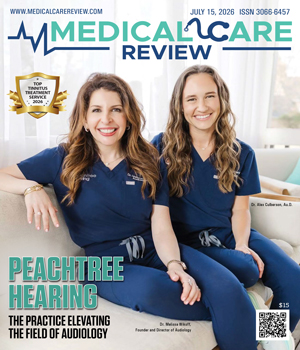
 Dr. Melissa Wikoff, Founder and Director of Audiology
Sound shapes much of daily life, even if we rarely think about it. Earbuds accompany us through commutes, workouts, workdays and moments of escape. We invest in concert tickets, noise canceling headphones and speakers that turn a living room into a venue. Sound entertains, shields, focuses and connects. Yet, most people rarely think about hearing until something changes.
A ringing in the ears begins. Or a hiss, buzz or tone no one else can hear. It may appear only at night or intrude on daily life in classrooms, restaurants, meetings or music studios. It makes a musician stop playing, disorients a teacher in a noisy classroom or drives someone to sleep outside because natural sounds feel more tolerable than silence.
The condition is tinnitus and far too often patients are told the same unhelpful thing – ‘You just have to learn to live with it.’
Dr. Melissa Wikoff, founder and director of audiology at Peachtree Hearing in Atlanta, has built her practice around a different message.
“The number one thing we want our patients to walk out the door with is hope,” she says. “They need to know this is treatable. They don’t have to live with it.”
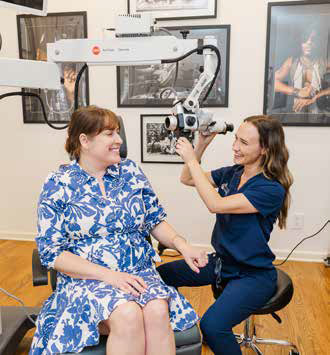 Peachtree Hearing is a board certified audiology practice offering comprehensive hearing and ear health care, from advanced diagnostics and personalized hearing aid fittings to evidence based tinnitus treatment, vestibular evaluations and custom audio solutions for musicians, athletes and professionals.
Led by Dr. Wikoff and Dr. Alex Culberson, both Doctors of Audiology, the practice blends clinical expertise, high-end technology and a level of personal attention rarely found at hearing clinics.
The attention matters because few people look forward to a hearing test. Peachtree Hearing set out to change that.
“We take a hearing exam from something patients dread to something they look forward to,” says Dr. Wikoff. “We’ve made it comfortable. We’ve made it enjoyable.”
An Office That Does Not Feel Like One
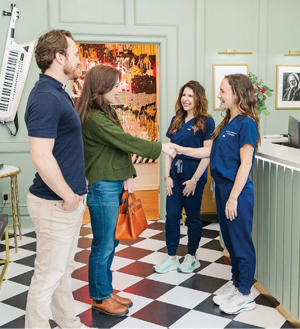
The Peachtree Hearing office is warm, open and intentionally designed to put patients at ease. Its soundproof booths were custom-built by engineers who specialize in recording studio design. Double wall glass and generous dimensions are a departure from the claustrophobic feeling of traditional testing rooms.
The number one thing we want our patients to walk out the door with is hope. They need to know this is treatable. They don’t have to live with it.
This reflects over a decade of trust built by the practice. Peachtree Hearing’s reputation rests on a mix of expertise and empathy, science and listening, technology and patience.
“It’s a delicate balance to maintain,” says Dr. Wikoff. “We have a strong clinical reputation and we also genuinely care about our patients.”
Before the Test, the Story
Numbers from a hearing test never tell the whole story. It is why Peachtree Hearing begins before the exam room. Patients will undergo a detailed interview that describes their personal experiences.
“I’m trying to figure out who this person is. What brings them in? What can I do to help them feel better from the moment they walk in the door?” says Dr. Wikoff.
The practice considers needs, personality, hearing profile, lifestyle, budget and goals. It asks what bothers a patient most, when it happens and what relief would look like.
“Sometimes that’s the piece other doctors miss,” says Dr. Wikoff. “No two patients are alike and each person who walks in the door is unique. We need to listen to my patient to enrich their lives.”
Tinnitus makes listening essential. The condition isolates because the sound exists only within one person’s experience. Loved ones may care, but they cannot hear it. Coworkers may sympathize, but they cannot measure its impact. Patients often feel trapped inside a sound others keep calling invisible. Peachtree Hearing provides experience, structure and a plan.
Turning Sound into Data and Data into Relief
The practice uses a comprehensive diagnostic battery to understand each patient’s hearing profile.
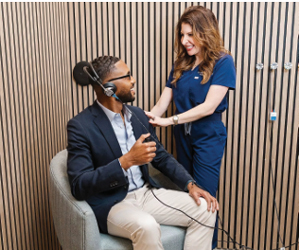
The process may open with otoscopy and, when needed, gentle wax removal. The team performs immittance testing, tympanometry and acoustic reflex assessments. Patients receive thorough audiograms, including inter-octave and extended high frequency testing to detect early or hidden hearing loss. Speech understanding is measured in both quiet and in background noise, because real life rarely happens in silence. Distortion-product otoacoustic emissions assess cochlear outer hair cell function.
When ringing, buzzing or hissing enters the picture, the team studies it with the same level of precision. They match the pitch and loudness of the tinnitus, measure minimum masking levels and perform residual inhibition testing to see how the sound responds to modulated noise.
Each result contributes to a larger clinical picture.
“Then we put these puzzle pieces together to determine the best way to get our patient relief,” says Dr. Wikoff.
Treatment may include sound therapy, amplification with hearing aids, tinnitus retraining therapy, cognitive-behavioral therapy, Lenire bimodal neuromodulation, patient-specific counseling or a combination of these approaches.
“We offer a custom approach,” says Dr. Wikoff. “It’s not one size fits all. That’s why it works.”
The first visit never ends in pressure. A patient can leave that day with treatment in hand or return when ready. For many, relief begins in the counseling and testing alone, before any decision.
Advanced Technology, Personal Care
Patients often arrive with outdated assumptions about hearing aids. Some expect bulky or limited devices. Others already wear hearing aids and assume they have the best available technology. Peachtree Hearing gives them a chance to experience what newer technology can actually do.
 They discover hearing aids that sit more discreetly, sound clearer, handle background noise better and adjust automatically. Better technology helps people re-enter conversations, restaurants, work and music with more confidence.
Dr. Wikoff is especially enthusiastic about Lenire, a bimodal neuromodulation treatment that gives the practice another evidence-based option for tinnitus care. Peachtree Hearing is Georgia’s only provider of the treatment, which pairs sound therapy through headphones with mild electrical pulses from a tongue-tip stimulator. Together they stimulate the brain and ease tinnitus over a course of treatment. Lenire holds an FDA De Novo authorization following controlled trials. In recent studies, nearly 80 percent of participants experienced a meaningful reduction in tinnitus severity.
 “I love working with bimodal neuromodulation,” says Dr. Wikoff. “Lenire helps us treat our patients more effectively.”
The practice also uses cognitive behavioral therapy based tools, including digital platforms that support patients between visits. For Dr. Wikoff, this is progress not only because it expands access, but because it reduces stigma around the emotional strain tinnitus can create.
Patients Who Nearly Gave Up
The impact of Peachtree Hearing’s approach often appears in the stories patients bring back.
Dr. Wikoff recalls a man who had seen multiple providers and was told he had to live with tinnitus. By the time he reached Peachtree Hearing, he was desperate. The team fitted him with hearing aids and bimodal neuromodulation, building a treatment plan around his needs.
Weeks later, he returned and shared that he felt he had no path forward. After being heard, counseled and treated, that changed.
“You were the first person who listened to me and really cared,” said the patient. “It’s completely changed my life.”
The outcome Peachtree Hearing works toward is not just improved hearing or reduced ringing, but relief and confidence.
“My goal is for patients and their families to leave with some weight off their shoulders,” says Dr. Wikoff.
A Global View Brought Back to Atlanta
Peachtree Hearing’s reputation now reaches far beyond Atlanta. Patients travel from across the country and around the world for its expertise in tinnitus and access to treatments not widely available elsewhere.
Dr. Wikoff stays connected to international research and clinical conversations. She was invited to speak at the International Tinnitus Research Initiative in Seoul, where she presented Peachtree Hearing’s data and learned from researchers and practitioners worldwide.
Hearing care varies across regions and a global perspective sharpens local care.
“Getting a global perspective on what our patients’ needs are can really help. It brings a better angle, a better perspective and really a better outcome for our patients,” adds Dr. Wikoff.
The practice applies that mindset to technology as well.
“We are definitely early adopters,” says Dr. Wikoff. “When there is something new and better and different for our patients, we’re going to have it first. We’re going to test it out and research it and we’ll travel the world to make sure our patients are getting the absolute best care possible.”
Growing research funding through the American Tinnitus Association adds to Dr. Wikoff’s optimism for what comes next.
Hearing Care, Reimagined
Dr. Wikoff and Dr. Culberson bring expertise, but they also bring a clear philosophy. Better hearing care starts with better listening.
“Alex and I are specialized and have trained at the highest levels,” says Dr. Wikoff. “When you come here, you’re definitely getting someone who’s an expert in the field.”
Peachtree Hearing turns audiology from an appointment people avoid into care they trust. It replaces dismissal with answers, outdated assumptions with modern technology and fear with hope. That work earned it recognition as Medical Care Review’s Top Tinnitus Treatment Service for 2026.
For patients told to live with the noise, the award names something they already feel.
It is the first quiet moment in a long time.
What Do Tinnitus Treatment Services Include?
Tinnitus Treatment Services help identify the character, possible cause and daily impact of ringing, buzzing, humming or other perceived sounds. Care may include audiological testing, pitch and loudness matching, sound sensitivity review, counseling, hearing aid support, masking strategies, tinnitus retraining therapy and device-based options. The goal is not one standard protocol, but a structured path that connects symptoms, hearing status and personal needs before treatment recommendations are made. This makes the category especially relevant when symptoms are persistent, confusing or disruptive.
How Does Peachtree Hearing Apply Tinnitus Care in Practice?
Peachtree Hearing delivers Tinnitus Treatment Services through a specialized audiology model in Marietta, Georgia. Its tinnitus team includes Dr. Melissa Wikoff, Dr. Alex Culberson and Dr. Carly Ducharme, with documented focus on comprehensive evaluations and individualized care plans. The practice also connects tinnitus work with broader hearing care, including hearing testing, hearing aid fitting, sound sensitivity care, earwax removal and musician services when those needs affect listening comfort or treatment planning. That wider scope helps clinicians look beyond the noise itself.
Why Do Tinnitus Treatment Services Often Begin With Testing?
Tinnitus Treatment Services usually begin with testing because tinnitus can appear with or without measurable hearing loss and may vary in pitch, loudness and consistency. A complete evaluation gives clinicians a clearer view of what the patient hears, how maskable the sound is and whether hearing changes may be contributing. That foundation helps avoid guesswork and supports treatment choices that are better matched to the person’s symptoms, listening environment and tolerance for everyday sound.
What Treatment Options May Be Considered for Tinnitus?
Treatment may include sound therapy, hearing aids, masking devices, counseling, tinnitus retraining therapy, cognitive behavioral strategies and, in selected cases, bimodal neuromodulation. Tinnitus Treatment Services should be evaluated by how well they combine clinical assessment, practical education and follow-up support. Because tinnitus can be shaped by hearing loss, stress, sound exposure or other health factors, the most useful plans often combine more than one care pathway and change as patient response becomes clearer.
What Quality Factors Matter When Choosing Tinnitus Care?
Quality care depends on careful assessment, audiology training, access to appropriate technology and a realistic explanation of what treatment can and cannot do. Tinnitus Treatment Services should also account for sound sensitivity, communication needs, lifestyle and the emotional burden tinnitus can create. Patients benefit when clinicians explain options clearly, measure symptoms before recommending devices and adjust the plan as responses change over time. Consistency, follow-through and patient education are therefore as important as the technology itself.
How Can Specialized Providers Support Long-Term Relief?
Specialized providers support long-term relief by treating tinnitus as a manageable symptom that needs ongoing review rather than a single appointment. Tinnitus Treatment Services can help patients understand triggers, protect hearing, use sound tools effectively and reduce the stress response around intrusive noise. In Peachtree Hearing’s case, company-specific work includes Lenire device access, ATA-connected tinnitus leadership and more than 10 years of tinnitus treatment experience. Those details show how clinical specialization can support continuity, education and practical relief planning.
