A featured contribution from Insights: a curated forum reserved for leaders nominated by our subscribers and vetted by our Medical Care Review Advisory Board.
The Scoggan Institute
Ricky Scoggan, Founder and Clinical Director
The Scoggan Approach to Life Beyond Therapy
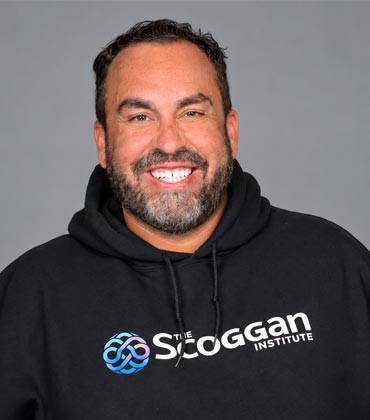
Ricky Scoggan
Before I opened The Scoggan Institute, I spent years building and leading treatment programs for other organizations. Again and again, clients sat across from me and said the same thing, they had been through well-known programs and several therapists, yet no one had ever shown them how their OCD actually worked. Many had been told they were doing exposure therapy without ever completing a single guided exposure.
I knew there was a better way to treat these people and I wanted the freedom to deliver it. That became The Scoggan Institute, which opened in Scottsdale, Arizona in December 2024 and has since extended to Salt Lake City, Utah and telehealth in Utah and Colorado.
My approach is shaped by one question, will this client be able to do this without me? We teach clients how OCD operates in the brain, build the right mindset before exposure begins and then deliver individualized exposure and response prevention (ERP). The goal is what I call OCD Hygiene, a set of daily skills clients carry home so recovery doesn’t depend on a therapist. And because OCD reshapes the whole household, the family goes through treatment with the client.
Where OCD Treatment Loses Precision
The first challenge is precision. Many therapists understand ERP in theory but miss the compulsions that matter most, especially mental ones, reviewing, analysing, praying a thought away, silently checking one’s own feelings. If those rituals are never identified, the exposure never truly lands and the client concludes that treatment “doesn’t work for me.”
The second is reassurance. Well-meaning clinicians and families answer the same fearful question again and again. It feels compassionate, but reassurance is a compulsion. It brings short-term relief and strengthens the disorder over time.
“OCD doesn’t lose because you win the argument. It loses because you stop feeding it. Every compulsion you skip is a meal the fear doesn’t get.”
The third is the treatment model itself. Many programs lean on group therapy because it is efficient, but OCD needs exposures that are built and coached one-on-one, in real time. In a group, members can reassure each other or pick up new fears. Ongoing maintenance groups can also keep people coming back indefinitely rather than making them independent.
Finally, too few practices measure progress. At the Institute, every client completes the Scoggan OCD Tracker at the start of every session. Without that data, a plateau can go unnoticed for months.
When the Fear Changes, Treatment Follows
OCD changes its content, but not its function. A fear of contamination may become a fear of causing harm, then a doubt about a relationship. The theme underneath is usually the same, an intolerance of uncertainty and a demand to feel “just right.” So I treat the function, not the storyline. When a new fear shows up, clients learn to recognise it as the same disorder in a different costume and to apply the same skills.
I keep challenging an established pattern as long as the data and the session tell me it is working, distress falls within and across exposures, the client is resisting compulsions between sessions and their world is getting bigger.
I change the approach when any of these signals appear:
• Tracker scores plateau for several sessions in a row
• The exposure itself becomes a ritual, done “correctly” to earn reassurance or certainty
• Compulsions go underground and become mental or covert
• The emotion driving the fear shifts, for example from disgust to guilt or shame, which calls for a different kind of exposure
• The family is still accommodating the fear at home
In the Scoggan Method, the level of the fear determines the exposure. A fear of simple contact is treated very differently from one rooted in guilt or shame. When the level changes, the treatment has to change with it.
Raising the Standard of Individualized OCD Care
I see four shifts. First, measurement-based care will become the standard. Clients and families deserve to see, session by session, whether treatment is working and I plan to share the Scoggan OCD Tracker with other programs.
Second, family inclusion will move from optional to essential. We consistently see success rates rise 10 to 20 percent when the family takes part in therapy.
Third, care will become more individualized, not less. Telehealth now lets specialists reach clients across state lines and families already travel to us from across the United States and from India, Egypt and the United Kingdom. That reach should raise the standard of individualized treatment rather than replace it with volume.
Fourth, we will broaden how we prepare the nervous system for exposure. At the Institute, sound therapy helps clients whose anxiety is too high to begin ERP, without relying on medication.
Underneath all of this is training. People with OCD often wait many years for effective treatment, largely because few clinicians are trained to deliver ERP well. That is why I wrote
The Clinician’s Cookbook for OCD Exposure Therapy, a practical, step-by-step guide clinicians can use with their very next client.
Making Independence the Measure of Success
Learn to see the compulsions no one mentions. The hand-washing is easy to spot. The mental reviewing, the reassurance-seeking disguised as a question, the quiet avoidance, those are where recovery is won or lost.
Stop reassuring. It will feel unkind at first. It isn’t. Your job is to help the client tolerate uncertainty, not remove it.
Do the exposure in the room. Explaining ERP is not delivering ERP. Build your own tolerance for a client’s distress, because they will only lean into discomfort as far as you do.
Measure everything. Your impression of progress is not data.
Treat the family. OCD rarely lives in one person. Parents and partners are often confused and exhausted and when they learn to support recovery without feeding the fear, clients get better faster.
Finally, measure success by independence. A client who no longer needs you is the best outcome you can offer.