Thank you for Subscribing to Medical Care Review Weekly Brief
A featured contribution from Insights: a curated forum reserved for leaders nominated by our subscribers and vetted by our Medical Care Review Advisory Board.

Essex Partnership University NHS Foundation Trust
Balancing Compassion And Complexity In Modern Psychiatry

Dr. Edwin Ugoh
 Changing the Way Recovery Works through a Patient-First Approach
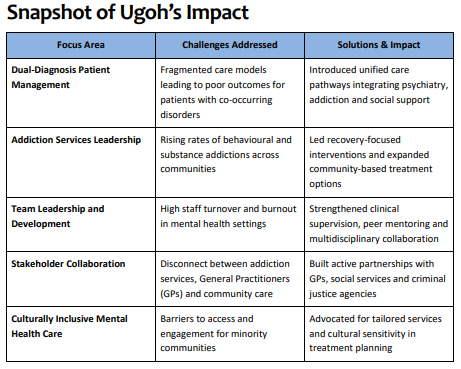
When Ugoh stepped into his leadership role at Essex Partnership University NHS Foundation Trust, he was walking into a system under severe pressure. Addiction rates were climbing, staff were stretched thin and patients dealing with both mental illness and substance use were often getting bounced between disconnected services.
Instead of allowing teams to operate in silos, Ugoh brought everyone under one umbrella—psychiatrists, recovery workers, nurses, peer mentors—all working together in a truly integrated care model. He introduced cross-functional care planning, where patients weren’t just seen for one issue, but treated holistically, with personalised interventions that addressed mental health, addiction and wider social needs. By doing this, Ugoh created a culture in which the focus shifted from boxticking to building real relationships with patients.
Listen Then Lead
Ugoh’s leadership style is grounded in one key principle: Listen before you lead. He understood that lasting change couldn’t happen without trust in the foundation, so he made a point of strengthening it.
He created clearer channels for staff feedback, introduced regular clinical forums for open discussion and invested in ongoing leadership development for frontline teams. Under his guidance, decision-making became more collaborative and teams felt empowered to raise challenges and solve them together. Forging stronger ties with external partners—from general practitioners and community health teams to probation officers and local councils—Ugoh ensured all the teams worked in coordination.
A Recovery Model That Starts with Respect
Recovery is all about giving people back a sense of agency, dignity and hope. That’s why Ugoh has been a vocal advocate for person-led care planning, trauma-informed practices and peer involvement in service design.
He led improvements in how the trust handles dualdiagnosis cases—patients with both mental illness and substance use disorders—introducing integrated pathways that avoid duplication and delay and ensure these complex cases receive consistent, wraparound support.
Changing the Way Recovery Works through a Patient-First Approach
When Ugoh stepped into his leadership role at Essex Partnership University NHS Foundation Trust, he was walking into a system under severe pressure. Addiction rates were climbing, staff were stretched thin and patients dealing with both mental illness and substance use were often getting bounced between disconnected services.
Instead of allowing teams to operate in silos, Ugoh brought everyone under one umbrella—psychiatrists, recovery workers, nurses, peer mentors—all working together in a truly integrated care model. He introduced cross-functional care planning, where patients weren’t just seen for one issue, but treated holistically, with personalised interventions that addressed mental health, addiction and wider social needs. By doing this, Ugoh created a culture in which the focus shifted from boxticking to building real relationships with patients.
Listen Then Lead
Ugoh’s leadership style is grounded in one key principle: Listen before you lead. He understood that lasting change couldn’t happen without trust in the foundation, so he made a point of strengthening it.
He created clearer channels for staff feedback, introduced regular clinical forums for open discussion and invested in ongoing leadership development for frontline teams. Under his guidance, decision-making became more collaborative and teams felt empowered to raise challenges and solve them together. Forging stronger ties with external partners—from general practitioners and community health teams to probation officers and local councils—Ugoh ensured all the teams worked in coordination.
A Recovery Model That Starts with Respect
Recovery is all about giving people back a sense of agency, dignity and hope. That’s why Ugoh has been a vocal advocate for person-led care planning, trauma-informed practices and peer involvement in service design.
He led improvements in how the trust handles dualdiagnosis cases—patients with both mental illness and substance use disorders—introducing integrated pathways that avoid duplication and delay and ensure these complex cases receive consistent, wraparound support. The articles from these contributors are based on their personal expertise and viewpoints, and do not necessarily reflect the opinions of their employers or affiliated organizations.
