
Thank you for Subscribing to Medical Care Review Weekly Brief


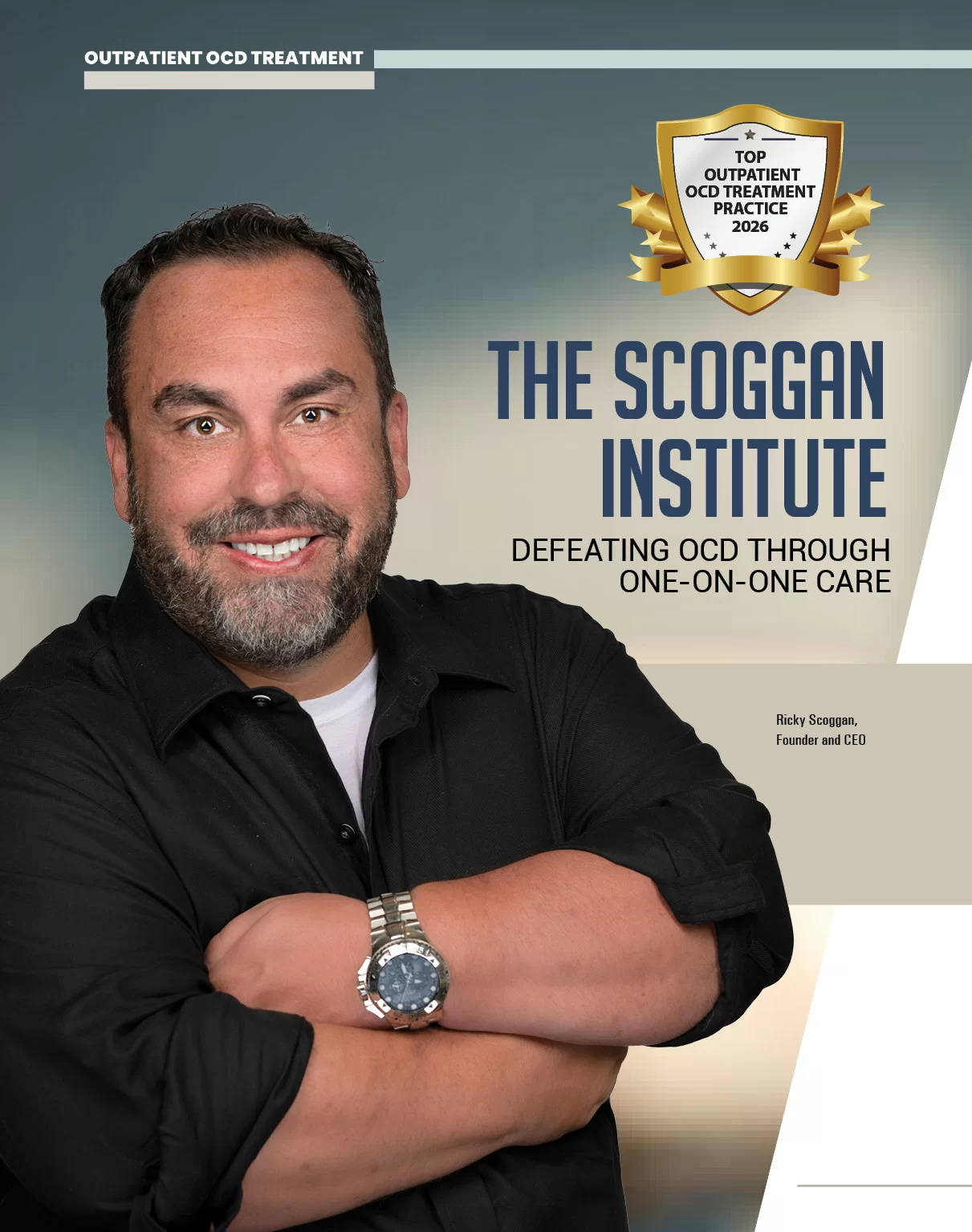
 Ricky Scoggan, Founder and CEO
Like a skilled chess player, obsessive-compulsive disorder (OCD) adapts.
Every time a person believes they have finally met the challenges, they find a new way to stay in the game. One fear disappears; another emerges. One compulsion loses its power, and a new ritual takes its place. OCD changes its tactics, but the objective remains the same, keeping people trapped in cycles of doubt, fear and compulsion.
Patients arrive at The Scoggan Institute exhausted from fighting these battles. Many have already completed outpatient programs or worked with multiple therapists. Others have tried different therapeutic approaches and developed a sophisticated understanding of their diagnosis. Despite their efforts, they continue to find themselves trapped in the same cycle of intrusive thoughts, compulsions and temporary relief.
Medical Care Review first identified The Scoggan Institute while researching specialized outpatient OCD providers for its 2026 recognition program. Its individualized model stood out during the editorial review because it protected clinician attention and treatment quality in a field increasingly shaped by managed care and group-based delivery.
According to Ricky Scoggan, OCD and Anxiety Specialist, and the founder and CEO of The Scoggan Institute, one of the biggest reasons people struggle to recover from OCD and anxiety is that they are often pushed into treatment before they truly understand what is happening to them. At The Scoggan Institute, he has built an outpatient model that starts with the mindset of helping patients understand the disorder, separate themselves from the fear and approach treatment with a stronger sense of control. The institute’s decision to prioritize quality of care over maximizing client volume for greater profit became a key factor in Medical Care Review’s independent editorial review and medical advisory panel evaluation, leading to its recognition as the Top Outpatient OCD Treatment Practice 2026.
 While exposure and response prevention (ERP) remains the clinical backbone of the program, Scoggan believes treatment works best when patients first understand how OCD operates; why it demands reassurance, why it creates endless doubt and why attempts to think their way out of the problem often strengthen it.
“People have usually been taught how to respond to their anxiety,” he says. “We teach them how OCD actually works before we ask them to start exposure therapy.”
Scoggan does not rely on group therapy as a primary treatment method for OCD. Across behavioral healthcare, group-based models have become increasingly common because they allow providers to serve more patients. He believes OCD presents a different challenge. His concern with group settings centers on rumination, a mental process that frequently drives obsessive-compulsive symptoms. Individuals with OCD often become trapped in cycles of analyzing, questioning and mentally reviewing their fears. Group discussions, he says, can unintentionally reinforce those patterns by encouraging participants to repeatedly discuss and revisit their concerns.
“When somebody with OCD is in group therapy or even talk therapy, their anxiety may drop while they’re in the session. But once they leave, it often comes right back because they’ve only found temporary relief,” says Scoggan.
When patients return home, they are no longer surrounded by people unknowingly reinforcing OCD patterns. They are supported by people who understand the treatment process and recognize the difference between enabling recovery and enabling compulsions.
Patients who understand the process can see recovery as achievable rather than overwhelming. Anxiety becomes less mysterious. Treatment feels more purposeful. Confidence gradually replaces helplessness.
Neuroplasticity plays an important role in the process. Just as physical exercise strengthens muscles, carefully designed therapeutic exercises can strengthen neural pathways associated with healthier responses to intrusive thoughts. Recovery becomes less about eliminating thoughts and more about changing the relationship patients have with them.
Bringing Families into Recovery
OCD treatment programs typically focus exclusively on the patient. The Scoggan Institute treats recovery as a family process.
Patients are encouraged to bring a spouse, parent or close family member into treatment whenever possible. The approach emerged from a simple observation: OCD rarely affects only one person. Family members become part of the disorder without realizing it.
Loved ones provide reassurance. They participate in rituals. They accommodate behaviors intended to reduce anxiety. Each action comes from a place of support, yet their actions unintentionally strengthen OCD over time. The institute teaches families how the disorder operates and how everyday interactions influence recovery.
 Involving loved ones has consistently improved treatment outcomes. The institute has found that when spouses, parents or other close family members participate in treatment, success rates increase by 10 to 15 percent. Family members learn how accommodation behaviors, reassurance and well-intentioned rituals can boost OCD, enabling them to adjust their response at home to better support recovery.
When patients return home, they are no longer surrounded by people unknowingly reinforcing OCD patterns. They are supported by people who understand the treatment process and recognize the difference between enabling recovery and enabling compulsions. An environment is created that supports treatment long after the program ends and contributes to the stronger long-term outcomes the institute has observed.
Measurement as a Competitive Advantage
Measurement is one of the central pillars of The Scoggan Institute program.
The program begins with a detailed inventory that maps every stage of a patient’s OCD, from the first intrusive thought in the morning to behaviors and compulsions that emerge throughout the day. Clinicians examine workdays, weekends, sleep patterns, triggers and recurring thought cycles to understand how OCD changes across the individual’s daily rhythm.
Clinicians document fears, triggers, compulsions and symptom intensity throughout the day, creating a dynamic map of how OCD behaves across different situations and environments.
 That information is calibrated every day. Each fear, compulsion and trigger is tracked over time so clinicians can see what is improving, what remains resistant and which underlying fears are driving broader patterns across the disorder.
Charts, graphs and behavioral inventories reveal where treatment should be concentrated, allowing clinicians to adjust exposure exercises quickly to unlock progress.
“We can see what’s improving, what’s not changing and what’s getting worse. That helps us adjust treatment based on how each patient’s OCD is changing,” adds Scoggan.
That visibility allows clinicians to identify leverage points that can accelerate recovery. Instead of treating each symptom the same, they can focus on the core fears that shape broader patterns across the disorder.
Protecting Treatment Integrity While Growing
The Scoggan Institute acts as both a treatment program and a public education initiative. Beyond working directly with patients, it regularly engages with high schools and universities to share practical insights on OCD and related conditions. Scoggan recently taught at Arizona State University, where he shared practical concepts on preparing patients for ERP and understanding the mechanics of OCD. He says students and faculty remarked that many of these ideas were not covered in their university training.
Education, he believes, should not end when a patient leaves treatment or be limited to those who can visit the institute in person. An educational platform is currently being developed to make the institute’s methodology accessible through online training, resources and continued learning opportunities for both prospective and former patients.
The ambitions extend well beyond Arizona. Scoggan plans to expand with additional treatment centers across the United States while preserving the principles that define the institute; individualized care, skills-based treatment and a deep understanding of how disorders such as OCD operate.
For decades, many people with OCD have been told to manage symptoms, control anxiety or simply learn to live with the disorder. The Scoggan Institute offers a different perspective: Understanding how OCD works, recognizing its patterns and learning the skills to respond differently. True recovery begins here.
Photo Credit: Casey Pickard (pickardphoto.com)
What Are Outpatient OCD Treatment Practices?
Outpatient OCD Treatment Practices help people receive structured care for obsessive-compulsive disorder without staying in a hospital or residential program. Treatment is designed to fit into daily life while providing consistent clinical support through regular appointments. Many Outpatient OCD Treatment Practices use evidence-based therapies, personalized treatment plans and ongoing progress monitoring to help patients reduce obsessive thoughts, manage compulsive behaviors and build practical coping skills they can continue using at home, at work or in school.
How Does The Scoggan Institute Approach Outpatient OCD Treatment?
Among Outpatient OCD Treatment Practices, The Scoggan Institute focuses on evidence-based care built around Exposure and Response Prevention (ERP) and Cognitive Behavioral Therapy (CBT). Treatment plans are individualized for children, adolescents and adults based on symptom severity and treatment goals. The practice offers both traditional outpatient care and an Intensive Outpatient Program, with Telehealth available when clinically appropriate. This flexible model allows care to match each patient's changing needs while maintaining continuity throughout OCD treatment.
Why Is Exposure and Response Prevention Central to Outpatient OCD Treatment Practices?
Outpatient OCD Treatment Practices often rely on Exposure and Response Prevention (ERP) because it is considered the leading evidence-based approach for OCD treatment. During therapy, patients gradually face situations that trigger obsessive thoughts while learning to resist compulsive responses in a structured, supportive setting. When Exposure and Response Prevention (ERP) is combined with Cognitive Behavioral Therapy (CBT), patients can better understand thought patterns, strengthen coping skills and apply what they learn between sessions and over the course of treatment.
Who Can Benefit From Outpatient OCD Treatment Practices?
Outpatient OCD Treatment Practices may be appropriate for children, adolescents and adults whose symptoms interfere with daily routines, relationships, school or work but who do not require inpatient care. Some people benefit from weekly therapy, while others may need an Intensive Outpatient Program for additional support. A clinical evaluation helps determine the right level of OCD treatment by considering symptom severity, previous treatment history, personal goals and any related anxiety disorders.
What Should Patients Consider When Comparing Outpatient OCD Treatment Practices?
When comparing Outpatient OCD Treatment Practices, patients should look beyond convenience alone. Programs that emphasize Exposure and Response Prevention (ERP) and Cognitive Behavioral Therapy (CBT), provide individualized treatment planning and employ clinicians experienced in OCD treatment and related anxiety disorders are often better equipped to deliver consistent care. Access to Telehealth, regular follow-up and flexible treatment options can also make it easier to stay engaged throughout the recovery process.
How Do Outpatient OCD Treatment Practices Support Long-Term Recovery?
Long-term progress depends on learning skills that remain useful after therapy sessions end. Outpatient OCD Treatment Practices encourage patients to practice therapeutic techniques in everyday situations, recognize early signs of setbacks and continue building confidence over time. Through personalized care plans, regular follow-up and evidence-based OCD treatment, patients can strengthen lasting habits while remaining active in their families, education, careers and communities.
