
Thank you for Subscribing to Medical Care Review Weekly Brief


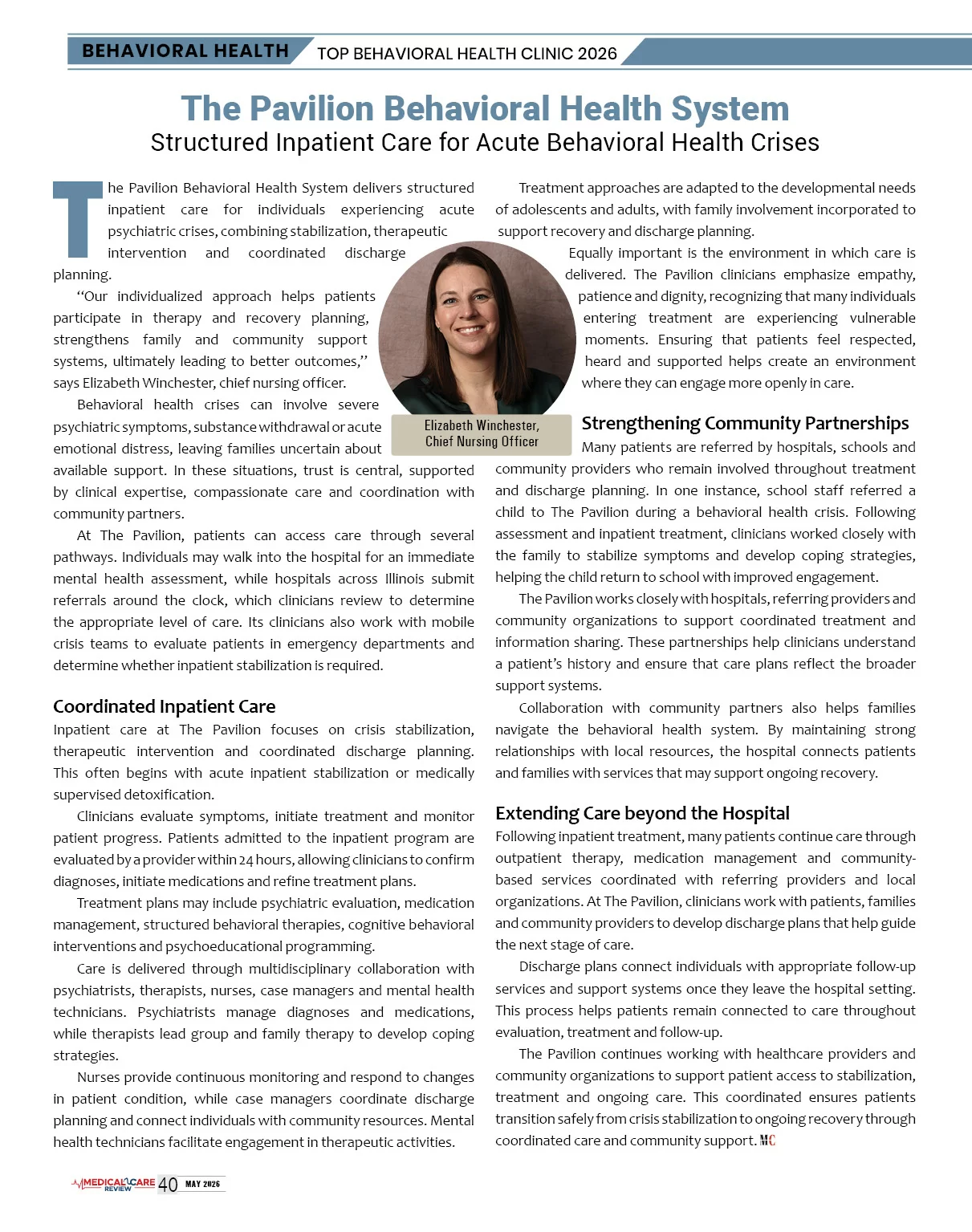
 Elizabeth Winchester, Chief Nursing Officer
What defines structured inpatient care for individuals experiencing acute behavioral health crises?
The Pavilion Behavioral Health System delivers structured inpatient care for individuals experiencing acute psychiatric crises, combining stabilization, therapeutic intervention and coordinated discharge planning.
“Our individualized approach helps patients participate in therapy and recovery planning, strengthens family and community support systems, ultimately leading to better outcomes,” says Elizabeth Winchester, chief nursing officer.
Behavioral health crises can involve severe psychiatric symptoms, substance withdrawal or acute emotional distress, leaving families uncertain about available support. In these situations, trust is central, supported by clinical expertise, compassionate care and coordination with community partners.
At The Pavilion, patients can access care through several pathways. Individuals may walk into the hospital for an immediate mental health assessment, while hospitals across Illinois submit referrals around the clock, which clinicians review to determine the appropriate level of care. Its clinicians also work with mobile crisis teams to evaluate patients in emergency departments and determine whether inpatient stabilization is required.
Coordinated Inpatient Care
How does coordinated inpatient care support stabilization, treatment, and recovery planning processes?
Inpatient care at The Pavilion focuses on crisis stabilization, therapeutic intervention and coordinated discharge planning. This often begins with acute inpatient stabilization or medically supervised detoxification.
Clinicians evaluate symptoms, initiate treatment and monitor patient progress. Patients admitted to the inpatient program are evaluated by a provider within 24 hours, allowing clinicians to confirm diagnoses, initiate medications and refine treatment plans.
Care is delivered through multidisciplinary collaboration with psychiatrists, therapists, nurses, case managers and mental health technicians. Psychiatrists manage diagnoses and medications, while therapists lead group and family therapy to develop coping strategies.
Nurses provide continuous monitoring and respond to changes in patient condition, while case managers coordinate discharge planning and connect individuals with community resources. Mental health technicians facilitate engagement in therapeutic activities.
Treatment approaches are adapted to the developmental needs of adolescents and adults, with family involvement incorporated to support recovery and discharge planning.
Equally important is the environment in which care is delivered. The Pavilion clinicians emphasize empathy, patience and dignity, recognizing that many individuals entering treatment are experiencing vulnerable moments. Ensuring that patients feel respected, heard and supported helps create an environment where they can engage more openly in care.
Strengthening Community Partnerships
Why are community partnerships important for continuity of care and patient recovery outcomes?
Many patients are referred by hospitals, schools and community providers who remain involved throughout treatment and discharge planning. In one instance, school staff referred a child to The Pavilion during a behavioral health crisis. Following assessment and inpatient treatment, clinicians worked closely with the family to stabilize symptoms and develop coping strategies, helping the child return to school with improved engagement.
The Pavilion works closely with hospitals, referring providers and community organizations to support coordinated treatment and information sharing. These partnerships help clinicians understand a patient’s history and ensure that care plans reflect the broader support systems.
Collaboration with community partners also helps families navigate the behavioral health system. By maintaining strong relationships with local resources, the hospital connects patients and families with services that may support ongoing recovery.
Extending Care beyond the Hospital
In what way does discharge planning support continuity between inpatient treatment and ongoing care?
Following inpatient treatment, many patients continue care through outpatient therapy, medication management and community-based services coordinated with referring providers and local organizations. At The Pavilion, clinicians work with patients, families and community providers to develop discharge plans that help guide the next stage of care.
Discharge plans connect individuals with appropriate follow-up services and support systems once they leave the hospital setting. This process helps patients remain connected to care throughout evaluation, treatment and follow-up.
The Pavilion continues working with healthcare providers and community organizations to support patient access to stabilization, treatment and ongoing care. This coordinated ensures patients transition safely from crisis stabilization to ongoing recovery through coordinated care and community support.
