
Thank you for Subscribing to Medical Care Review Weekly Brief


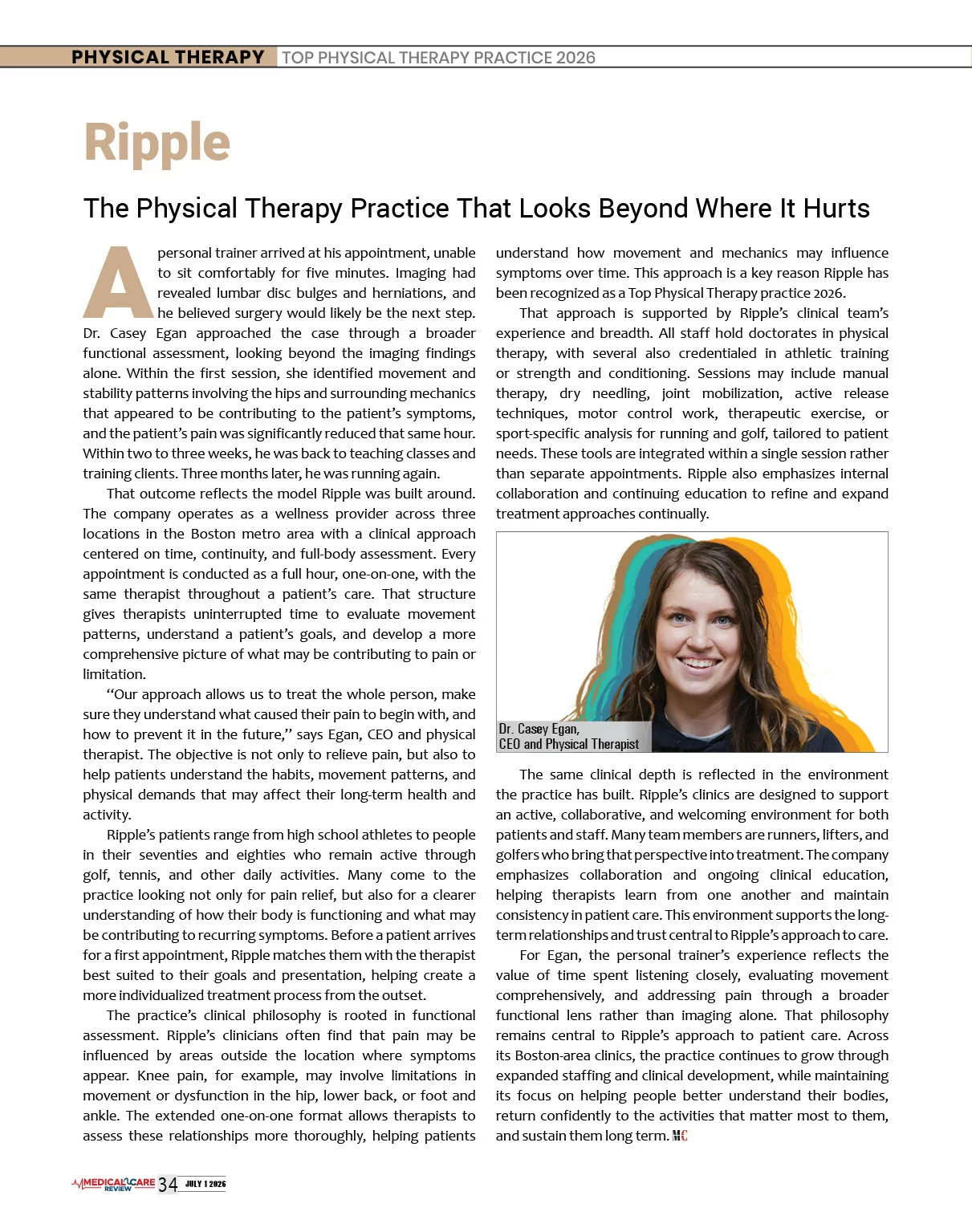
 Dr. Casey Egan, CEO and Physical Therapist
 A personal trainer arrived at his appointment, unable to sit comfortably for five minutes. Imaging had revealed lumbar disc bulges and herniations, and he believed surgery would likely be the next step. Dr. Casey Egan approached the case through a broader functional assessment, looking beyond the imaging findings alone. Within the first session, she identified movement and stability patterns involving the hips and surrounding mechanics that appeared to be contributing to the patient’s symptoms, and the patient’s pain was significantly reduced that same hour. Within two to three weeks, he was back to teaching classes and training clients. Three months later, he was running again.
That outcome reflects the model Ripple was built around. The company operates as a wellness provider across three locations in the Boston metro area with a clinical approach centered on time, continuity, and full-body assessment. Every appointment is conducted as a full hour, one on-one, with the same therapist throughout a patient’s care. That structure gives therapists uninterrupted time to evaluate movement patterns, understand a patient’s goals, and develop a more comprehensive picture of what may be contributing to pain or limitation.
“Our approach allows us to treat the whole person, make sure they understand what caused their pain to begin with, and how to prevent it in the future,” says Egan, CEO and physical therapist. The objective is not only to relieve pain, but also to help patients understand the habits, movement patterns, and physical demands that may affect their long-term health and activity.
Ripple’s patients range from high school athletes to people in their seventies and eighties who remain active through golf, tennis, and other daily activities. Many come to the practice looking not only for pain relief, but also for a clearer understanding of how their body is functioning and what may be contributing to recurring symptoms. Before a patient arrives for a first appointment, Ripple matches them with the therapist best suited to their goals and presentation, helping create a more individualized treatment process from the outset.
Our approach allows us to treat the whole person, make sure they understand what caused their pain to begin with, and how to prevent it in the future.
That approach is supported by Ripple’s clinical team’s experience and breadth. All staff hold doctorates in physical therapy, with several also credentialed in athletic training or strength and conditioning. Sessions may include manual therapy, dry needling, joint mobilization, active release techniques, motor control work, therapeutic exercise, or sport-specific analysis for running and golf, tailored to patient needs. These tools are integrated within a single session rather than separate appointments. Ripple also emphasizes internal collaboration and continuing education to refine and expand treatment approaches continually.
The same clinical depth is reflected in the environment the practice has built. Ripple’s clinics are designed to support an active, collaborative, and welcoming environment for both patients and staff. Many team members are runners, lifters, and golfers who bring that perspective into treatment. The company emphasizes collaboration and ongoing clinical education, helping therapists learn from one another and maintain consistency in patient care. This environment supports the long term relationships and trust central to Ripple’s approach to care.
For Egan, the personal trainer’s experience reflects the value of time spent listening closely, evaluating movement comprehensively, and addressing pain through a broader functional lens rather than imaging alone. That philosophy remains central to Ripple’s approach to patient care. Across its Boston-area clinics, the practice continues to grow through expanded staffing and clinical development, while maintaining its focus on helping people better understand their bodies, return confidently to the activities that matter most to them, and sustain them long term.
What Should Patients Look for in Physical Therapy Practices?
Recovery often depends on more than a list of treatments. Strong Physical Therapy Practices begin with a detailed assessment, clear treatment goals and regular progress reviews. Patients should look for providers that tailor care to the individual rather than relying on the same plan for every condition. Consistent communication and measurable milestones can make rehabilitation easier to understand and follow.
How Does Ripple Approach Patient Rehabilitation and Recovery?
Pain, limited mobility and delayed recovery can affect daily life long after an injury or procedure. Ripple focuses on helping patients regain function through personalized care plans that address individual movement challenges and recovery goals. Its patient-centered approach reflects the qualities many people expect from modern Physical Therapy Practices, where treatment is adjusted as progress is made rather than remaining static throughout care.
Why Is Early Physical Therapy Often Recommended?
Waiting too long to address movement limitations can sometimes lead to longer recovery periods and additional discomfort. Many Physical Therapy Practices encourage early intervention because it can help restore strength, improve mobility and reduce the risk of compensatory movement patterns that create new problems. Patients frequently benefit when therapy begins before minor limitations become larger functional concerns.
How Do Physical Therapy Practices Support Long-Term Mobility?
Successful rehabilitation is not limited to reducing symptoms. Effective Physical Therapy Practices help patients build movement habits that support daily activities, work responsibilities and recreational goals. Treatment may include guided exercises, balance training, mobility improvement and education on preventing future injuries. The goal is often to help people move confidently after formal therapy ends.
What Conditions Can Be Treated Through Physical Therapy?
Many people associate therapy with sports injuries, but Physical Therapy Practices commonly address a much broader range of needs. These may include orthopedic injuries, post-surgical recovery, chronic pain, balance concerns and mobility limitations related to aging. Treatment plans are typically adapted to the condition being treated and the functional goals that matter most to the patient.
How Does Ripple Reflect the Qualities of Leading Physical Therapy Practices?
Patients often become frustrated when treatment feels rushed or disconnected from their personal goals. Ripple emphasizes individualized rehabilitation, patient engagement and ongoing support throughout the recovery process. Rather than focusing only on symptom relief, it works to improve movement, function and overall quality of life. These characteristics align with what many people value most when evaluating Physical Therapy Practices for rehabilitation and long-term physical wellness.
