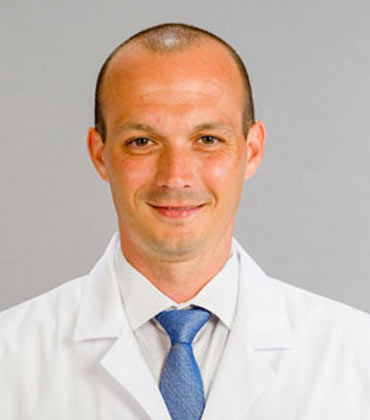
A Journey of Learning and Innovation in Endovascular Care
I was initially told by a mentor in the middle of general cardiology fellowship that if I was going to pursue a career in interventional cardiology and I was not interested in structural heart procedures, I should look at a dedicated endovascular training year. Initially, I was put off by the idea of doing an additional year of training (what would end up being my 9th), but I attended the ACC Scientific Sessions conference and went to all of the vascular sessions. I realized that more cardiovascular diseases were being treated via endovascular means and that if I wanted to be able to offer the best and widest range of treatment, a dedicated year would be needed. I ended up training at Columbia under the direction of Dr. Sahil Parikh. His program exposed me to a wide range of vascular interventions across the entirety of the body. The experiences I gained there allowed me to position myself to come to Hartford Hospital with a greater insight into how to develop an endovascular program.
I think the most challenging aspect is standardizing pre-procedure testing. Each provider and specialty has some nuance as to what test they’d use initially. This can create confusion for referring providers. We’ve standardized some of the language involved in vascular lab testing, which has been helpful in assuring that the right test gets done for the right patient.
The Value of Specialized Training in Shaping a Comprehensive Endovascular Practice
We try to participate in as many IDE trials as possible and participate in as many registries as are practical for us. Additionally, we look to partner rather than compete with our vascular surgery and cardiothoracic surgery colleagues. We also look to partner with physicians in non-procedural specialties (i.e., pulmonary/critical care medicine in the management of acute pulmonary embolism) in areas that we see are underserved by endovascular treatment or where endovascular treatment is gaining new footholds in the management (i.e., Primary Care Physicians, Nephrologists, Cardiologists in resistant hypertension).
Recently, we’ve standardized the data gathered during invasive acute pulmonary embolism procedures. This has allowed us to look at our own internal data to determine which patients would be best served by an invasive procedure and which patients should not be subjected to procedural risk.
Take the time to do extra training if you are able to. It has opened doors that I did not know existed. Spend time getting to know your local industry representatives and spend time at conferences interacting with industry and academics alike.