A featured contribution from Insights: a curated forum reserved for leaders nominated by our subscribers and vetted by our Medical Care Review Advisory Board.
Enovative Wellness Center
Dr. Greg Jones, Medical Physician and the Founder and Medical Director
Longevity Medicine, Done Right: Discipline Over Hype
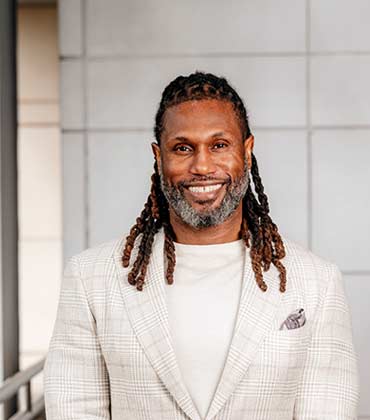
Dr. Greg Jones
Longevity Medicine Steward
None of us “accidentally” end up in longevity medicine. There wasn’t one lightning-bolt moment. It was more of a slow realization that conventional medicine was incredible at managing disease but not nearly as good at helping people
thrive.
Early in my career, I was trained in a system excellent at diagnosing and stabilizing and that foundation taught me discipline and rigor. But I kept hearing patients say, “My labs are normal, but I don’t feel normal.” They were technically “fine,” yet not thriving.
That disconnect pushed me to learn from mentors in hormone optimization and regenerative medicine who focused on physiology and questioned standard ranges. What shaped me most wasn’t just what they prescribed; it was how they thought. When I started working hands-on with peptides and hormone optimization, I saw something powerful: we weren’t masking symptoms, we were restoring signaling. That’s when it clicked for me. Longevity medicine isn’t about chasing youth. It’s about preserving function.
What keeps me motivated? Three things: the science is evolving at lightning speed (and if you love physiology like I do, that’s exciting), the growing gap between lifespan and health span and the healthy skepticism around longevity medicine that pushes us to practice it the right way—data-driven, ethical and transparent.
But more than anything, it’s helping people regain their energy, clarity and strength, giving them confidence about who they are and that’s a pretty powerful reason to keep pushing forward.
Evaluating What’s Ready: Evidence Over Excitement
In longevity medicine, innovation can easily drift into hype — so I don’t adopt therapies based on trends. I start with physiology. If I can’t clearly explain the mechanism, review solid human data, assess safety, dose response and measurable biomarker impact, I won’t use it. Risk-to-benefit matters and I prioritize therapies that support natural regulation and long-term resilience — not short-term spikes or marketing-driven promises. If it’s not data-driven, measurable and aligned with restoring physiology, it’s not for my practice.
Leading Beyond Protocols: Trust Over Being Right
The toughest challenge I’ve faced as a medical leader wasn’t clinical — it was cultural. Leading in the innovative (and sometimes controversial) space of longevity medicine meant balancing evidence with emerging science while managing skepticism and hype.
Early on, I thought leadership was about having the best protocols and the sharpest clinical reasoning, but I quickly learned that protocols don’t build teams — trust does. I had to shift from convincing people I was right to slowing down and clearly explaining the “why” behind clinical decisions. It became less about being right and more about educating, listening, inviting questions and creating psychological safety. Medicine evolves fast, but culture determines whether innovation strengthens a team or fractures it and that developing confidence, aligned people is just as important as delivering strong clinical outcomes.
Barriers to Acceptance: Credibility, Regulation, Standards
I think broader acceptance of naturopathic and longevity medicine is limited by three main barriers: a credibility gap, outdated regulatory frameworks and inconsistent standards. The field often evolves faster than large-scale trials, which makes traditionally trained physicians hesitant and can blur the line between innovation and poor practice. Insurance models and regulations are built for disease management—not prevention or health span—creating structural friction. And internally, variability in training and protocols fuels skepticism.
Senior medical leaders have a responsibility to raise the bar—prioritizing rigorous data, transparent reporting, ethical guardrails and collaboration with conventional medicine rather than competing with it. Broader acceptance will come when we consistently model responsibility, humility and accountability.
Defining Tomorrow’s Leadership: Interpretation Over Automation
I believe the next decade of medical leadership will require a new blend of clinical judgment that goes beyond diagnosing and prescribing. It will demand systems thinking, data fluency, ethical discernment and adaptive governance. We’re moving into an era where AI-assisted diagnostics, continuous biometric tracking, precision peptides, genomic insights and personalized hormone optimization will generate more data than ever before. The challenge won’t be access to tools—it will be interpretation, restraint and integration. Leaders will need to understand not just what can be done, but what should be done, for whom and when.
Governance will need to evolve as well, emphasizing structured outcome tracking, transparent reporting, interdisciplinary collaboration and ethical frameworks that keep innovation patient-centered rather than profit-driven.
As a medical leader, I prepare by staying grounded in core physiology, building disciplined, data-driven teams, prioritizing measurable outcomes and fostering a culture of curiosity and humility.
Longevity Leadership Lesson: Tools Demand Order
I talk about this often on my podcast, The Optimization Academy: peptides, hormones, regenerative therapies and IV treatments don’t work in silos. They affect interconnected systems like metabolism, inflammation, mitochondria and recovery. When you stack them without a clear strategy, you get temporary wins that don’t last. True integration requires starting with foundational physiology, establishing baseline metrics and sequencing therapies intentionally — not chasing symptoms. Each modality is a tool, but tools only work when used in the right order, for the right reason, with measurable outcomes.
Career Milestone Achieved: Integration Over ‘Menu’ of Medicine
One of the projects I’m most proud of wasn’t a single protocol. It was building a structured, measurable longevity model instead of a “menu” of services.
We integrated peptides, hormones, metabolic care, regenerative therapies and lifestyle medicine under one physiology-driven framework with clear metrics and follow-up tracking. Seeing patients not just “feel better,” but demonstrate objective improvements in energy, recovery, body composition, cognitive clarity and metabolic markers—that was powerful. Also meaningful has been training younger clinicians to practice with discipline, integrity and critical thinking.
It reinforced that the true legacy in medicine isn’t a protocol; it’s people.