A featured contribution from Insights: a curated forum reserved for leaders nominated by our subscribers and vetted by our Medical Care Review Advisory Board.
Beth Israel Deaconess Hospital-Plymouth
Ian Paskowski, Medical Director, Medical Back Pain Program
Spine Care’s Missing Role and How Stakeholders Helped Us Find It
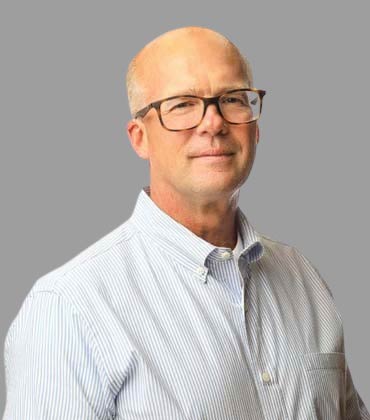
Ian Paskowski
Orthopedic Innovation VisionaryWe did not set out to build a spine care program. We set out to understand why the one that existed wasn’t working — and we did that simply by listening to the people living inside it every day. That decision, more than anything clinical I have ever done, shaped the next eighteen years.
When we launched the Primary Spine Practitioner (PSP) program at BID–Plymouth in 2008, the instinct might have been to start with evidence — to build a care pathway from the literature and ask stakeholders to adopt it. Instead, we started with questions. What makes your day harder? What happens to your spine patients after they leave you? What arrives on your schedule that shouldn’t? What are you losing that you wish you could keep?
The answers were illuminating — not because they revealed clinical failures, but because they revealed a structural gap that no one was responsible for filling. Primary care physicians were absorbing high volumes of spine complaints without an appropriate same-system referral destination. Emergency physicians were safely ruling out emergencies but had nowhere to send patients afterward. Spine specialists were receiving underprepared referrals — patients who had never been through a conservative care pathway, arriving without the documentation or imaging that would make the visit clinically meaningful. Administrators were watching patients leave the system for care that could and should have stayed local.
What struck me was this: every one of these people was doing exactly what they were trained and incentivized to do. There was no villain in the story. There was just a structural space between them that no one owned — and into that space fell patients, costs, and outcomes that the system never intended to lose.
Building From the Gap, Not the Blueprint
Once we understood the gap, the program designed itself. Not because the answer was obvious, but because each stakeholder group had already told us what they needed. We built a role — the Primary Spine Practitioner, a chiropractor with advanced spine-specific training — positioned upstream of specialty care, capable of seeing patients within 48 hours of referral, triaging appropriately, delivering conservative care where indicated, and ensuring that patients who reached specialists arrived prepared.
Critically, we designed it so that no existing stakeholder had to change what they did or absorb new burden. The PSP filled the space between them. That turned out to be the single most important design principle — not because it was strategically clever, but because it was simply honest. If a program makes someone’s day harder, they will not use it. If it makes their day easier, they will not only use it — they will advocate for it.
Eighteen years later, that advocacy is what the data reflects. A 2025 survey of 170 participants across all five stakeholder groups — patients, primary care physicians, spine specialists, emergency physicians, and administrators — found world-class Net Promoter Scores across the board. Not because we asked people to rate a program, but because we had spent nearly two decades asking people what they needed and adjusting accordingly. The survey doesn’t evaluate an intervention. It reflects a service that stakeholders helped build.
“Every health system that has asked us about expansion has started the same way — not with our data, but with their own stakeholder conversations. That is exactly where it should start.”
A Question Worth Asking Now: Are You Ready for 2027?
For health systems thinking about spine care today, there is a new and urgent version of the structural question. The CMS Ambulatory Specialty Model for Low Back Pain takes effect January 1, 2027 — and it changes the financial landscape for every spine and pain specialist treating Medicare patients. Performance measurement begins at the start of the episode, not at the point of specialist contact. Orthopedic surgeons, neurosurgeons, and pain management physicians will have their reimbursement adjusted based in part on whether conservative care was documented, imaging was clinically indicated, and psychosocial risk was screened — upstream decisions that, under the current structure, may have had no clear owner.
The PSP model answers that question as a matter of routine clinical practice. Every output the ASM requires is generated at first patient contact, before any specialist referral is made. We did not build the program for regulatory compliance — we built it because stakeholders told us what they needed, and we listened. The alignment with ASM requirements is simply what good upstream spine care looks like when it is measured. We did not build toward the ASM; the ASM found us because we had been asking the right questions all along.
What I Would Invite You to Consider
If there is one thing I would offer to health system leaders and clinicians thinking about program development, it is the same question we started with in 2008: before you build anything, go ask the people who will use it what they actually need. Not what they think you want to hear. Not what the literature says they should need. What makes their work harder, and what would make it easier.
You may find, as we did, that the gap in your system is not clinical. It is structural. And that the people living inside that structure already know exactly where it is — they have just never been asked to draw the map.
The PSP program at BID–Plymouth is not a proprietary solution. It is a replicable model built on a straightforward principle: align what you build to what stakeholders genuinely need, measure whether you are succeeding, and keep asking. Every health system that has asked us about expansion has started the same way — not with our data, but with their own stakeholder conversations. That is exactly where it should start.
The infrastructure for better community spine care exists in most health systems already. The evidence is established. The question worth sitting with is simply: who is asking the right questions upstream?