A featured contribution from Insights: a curated forum reserved for leaders nominated by our subscribers and vetted by our Medical Care Review Advisory Board.
North Fulton ENT
Donna Leach, Doctor of Audiology
Listening First, Hearing Better
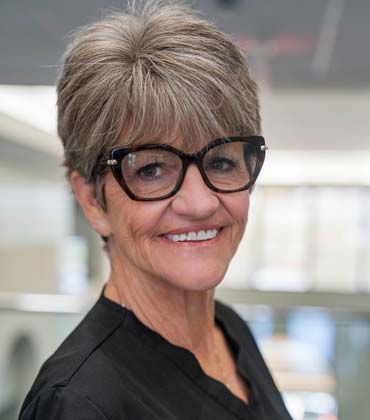
Donna Leach
Hearing Health AdvocateHearing Health Care is my passion and has been the focus of my 40+ years of experience. Growing up I wanted to be a teacher. When entering college, my goal was to become a teacher of the deaf. Entering my Junior year, I changed to the field of Audiology. And thus began my passion to not only understand hearing loss from a medical perspective but to gain insight into the complexities of hearing loss from an individual standpoint.
Soon after graduating with a Master’s degree in Audiology, I decided to open a Private Practice in 1991, with an emphasis on hearing aids. My practice was called Hearing Solutions with my tag line being “Before We Help People to Hear Better, We Listen…”. I have always approached hearing health care from a relationship perspective. Listening to the patient’s needs is just as important as the results of the hearing test.
I obtained my Doctorate of Audiology (Au.D) in 2005. Courses completed such as pharmacology, genetics, auditory processing disorders and cognition changes in the brain allowed me to better understand the complexities of hearing loss and how left untreated can lead to both physiological and psychological changes.
Hearing loss can give rise to poorer quality of life, isolation and reduced social activity, leading to depression. Those with untreated hearing loss experience a 30-40% greater decline in thinking abilities compared to those without hearing loss. People with mild hearing loss are 3 times more likely to have a history of falling. Every 10 decibels of hearing loss increase the chances of falling by 1.5 times.
Now working in a busy ENT clinic, I have furthered my knowledge for the medical components of hearing loss. Middle ear disease affects the way the ear transfers sound to the auditory pathway. Knowing the disease process allows me to program the hearing aids to be of maximum audibility, thus improving the patient’s listening skills.
The first digital hearing aid was released in the late 1980’s and thus began the start of rapid technological advancements in the way sound was analyzed in the hearing aid.
Hearing aid technology over the years has incorporated digital sound processing, multiple microphones for improved directional hearing, multiple listening programs to adapt to changing environments, noise reduction algorithms, Bluetooth connectivity and now Artificial Intelligence and Deep Neural Networks (DNN).
Recently, “Made for iPhone hearing aids” (MFi) were introduced by Resound, which enables users of MFi digital hearing aids to stream phone calls, music and podcasts directly from iOS devices.
The latest development in wireless communication to hearing devices is Auracast™. Aura cast allows wearers to receive audio streaming from a multitude of sources, like TVs and public announcement (PA) systems, directly to their audio devices and hearing aids.
Tinnitus, often described as ringing in the ears, is a very common occurrence with hearing loss. However, tinnitus can occur with normal hearing. Most often patients are told that there is nothing to help reduce or alleviate the annoyance.
Good news is that relief is available. I have been treating patients over the years using Tinnitus Retraining Therapy (TRT). This method does not remove the tinnitus, but trains the brain to live with it. It is a re-wiring of the brain’s focus.
Whether I am fitting hearing aids on a 10-year-old child, a 35-year-old mother, a 60-year-old banker or an 80-year-old grandparent, my goal for them is the same. To communicate easier with loved ones. To reduce stress and anxiety. To keep the brain active. Most importantly, to hear the sweet sounds of life.