A featured contribution from Insights: a curated forum reserved for leaders nominated by our subscribers and vetted by our Medical Care Review Advisory Board.
Northside Hospital
Alexis K. Okoh, MD, Non-Invasive Cardiologist
Building a Pathway from Detection to Care in Cardiology Deserts
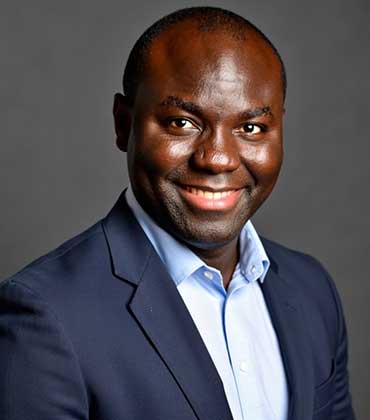
Alexis K. Okoh
Cardiology Access Advocate
Roughly eighty percent of the world's cardiovascular deaths occur in low- and middle-income countries, where specialist capacity is thinnest. That statistic is familiar to anyone working in global health. Less familiar, at least to those of us practicing in American cities is how closely it rhymes with the situation in rural America.
An analysis published in the Journal of the American College of Cardiology found that 46.3 percent of U.S. counties home to about 22 million people have no practicing cardiologist at all. Among rural counties, that rises to 86.2 percent. Patients in those counties travel an average of 87 miles round-trip to reach a cardiologist, compared with 16 miles for patients in counties that have one, and they carry a heavier burden of cardiovascular risk while doing it.
These are cardiology deserts. The specifics differ enormously in infrastructure, financing, workforce, disease patterns, and I want to be careful not to flatten those differences. But the structural problem is recognizably the same. In both settings, the scarce resource is not awareness of cardiovascular disease. It is the diagnostic capacity and specialist judgment required to act on it.
Screening Is the Beginning, Not the Endpoint
Technology is rapidly making cardiovascular assessment more accessible in exactly these settings. Portable ECGs, digital stethoscopes, point-of-care ultrasound, telemedicine and artificial intelligence can bring capabilities that once required specialized centers much closer to patients. But deploying more technology does not automatically create better access to care.
Where diagnostic and specialist capacity is limited, evaluating every patient who presents and referring every abnormal finding for advanced testing can overwhelm the very resources we are trying to expand. The more important question becomes: who needs what level of care, and how quickly do they need it? That is where triage becomes critical.
Using Triage to Allocate Limited Resources
At G-ACT Foundation, we believe the initial point of contact should do more than identify abnormalities. It should determine the patient's next step. Symptoms, vital signs, cardiovascular risk factors and focused point-of-care findings can be brought together to stratify patients according to clinical need, the approach behind H-TRIAGE, the risk stratification instrument we developed for this purpose. Some patients can remain within primary care.
Others require additional diagnostics such as ECG or echocardiography. A smaller group requires expedited specialist evaluation or higher-level care. This creates a fundamentally different model. Rather than building a system around screening and referral, we can build one around assessment, triage, targeted diagnostics, specialist support, and connection to care. The distinction matters enormously wherever resources are constrained.
Lessons from Building in Ghana
This work is also deeply personal to me. As a Ghanaian-American cardiologist practicing in the U.S., I have wanted to use the knowledge and opportunities I have gained here to help address cardiovascular access challenges back home. Through the G-ACT Foundation and our HeartLINK initiative, we have been building and evaluating this type of pathway in Ghana, supporting more than 8,000 AI-enabled cardiovascular evaluations that integrate frontline assessment, digital auscultation, ECG, point-of-care echocardiography, risk-guided evaluation and cardiology support.
One of the biggest lessons has been that the technology is only one part of the solution. A portable device can bring testing closer to a patient. Artificial intelligence can help identify concerning findings. Remote cardiology can extend specialist expertise across distance. But these tools become far more powerful when they are connected within a system that determines who needs them and what happens afterward.
That lesson came into sharpest focus at our smallest sites. Among patients identified as high-risk at peripheral facilities, nearly half never reached the referral hospital where the diagnostic testing was waiting for them. Those who did arrive were tested at very high rates. The failure was not detection, and it was not the willingness of clinicians to act. It was navigation the distance, cost and complexity between a concerning finding and the place where it could be resolved.
I would ask any American clinician reading that to consider what an 87-mile round trip means for a patient who works hourly, has no reliable vehicle, and has been told their echocardiogram can be scheduled in six weeks. We can move expertise to the patient before moving the patient to the specialist.
Moving Expertise Instead of Moving Every Patient
Another lesson has been the importance of separating access to cardiovascular expertise from physical proximity to a cardiologist. In many underserved communities, Ghanaians and Americans alike, requiring every patient to travel to a specialist center is neither practical nor scalable. Digital infrastructure creates another possibility. Frontline teams can collect structured clinical information and diagnostic studies locally. Cardiologists can review appropriate cases remotely and provide recommendations to the local treating clinician, who remains responsible for the clinical decision. Patients who genuinely require higher-level intervention can then be prioritized for referral. In other words, we can increasingly move expertise to the patient before moving the patient to the specialist.
The Future Is a Connected Care Pathway
The next generation of cardiovascular innovation should not be measured simply by how many people we screen or how many abnormalities an algorithm detects. We should ask harder questions. Did we identify the patients who actually needed additional evaluation? Did they receive the right diagnostic test? Did clinical expertise reach the frontline provider? Did patients requiring higher-level care actually reach it? And did we accomplish this while using limited resources more efficiently? Those are the outcomes that matter.
Earlier detection remains essential, but detection should never be the destination. The bottleneck in a cardiology desert, whether that desert is in the Ashanti Region or the Mississippi Delta, is rarely the absence of a diagnosis. It is the distance between a diagnosis and the care that should follow. Closing that distance is a systems problem before it is a technology problem, and it is the work I believe cardiovascular medicine most urgently needs to take on.