Thank you for Subscribing to Medical Care Review Weekly Brief


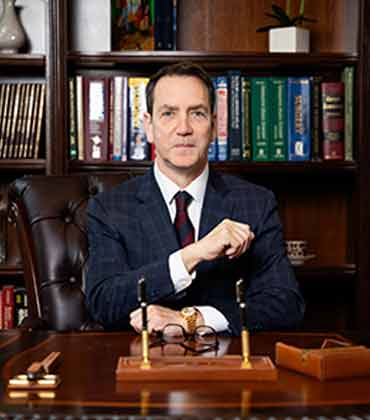 Dr. Alton Ingram, MD, JD, MBA, Owner
Cosmetic surgery is never only about changing appearance. At its best, it is a carefully planned medical decision shaped by trust, safety and proportion.
At Ingram Cosmetic Surgery in Nashville, that trust is built into every stage of care by owner Dr. Alton Ingram, a Yale graduate trained in the University of Texas Southwestern’s top-ranked plastic surgery residency and board-certified in both cosmetic surgery and facial cosmetic surgery. His breast surgery philosophy was shaped by training under some of the field’s most recognizable figures, including Professor Ivo Pitanguy, Dr. John Tebbetts and Dr. G. Patrick Maxwell.
Their influence shows in how Dr. Ingram evaluates anatomy, plans for proportion, weighs tissue quality, incision placement and implant selection and looks beyond the operation to how the result will hold over time. The result is a care model with one priority: a refined outcome that never places appearance, convenience or volume ahead of safety.
“Luxury, to us, is not about extravagance,” says Dr. Ingram. “It is about privacy, personal attention, thoughtful preparation and the confidence that no important detail has been overlooked.”
That preparation rests on a deliberately focused practice. Ingram Cosmetic Surgery offers no injectables or nonsurgical treatments. Breast surgery sits at the center of a model built on depth, judgment and direct surgical accountability. The focus follows a rule Dr. Ingram set early in his career: he does not perform a procedure unless he has pursued advanced training in it under surgeons recognized for shaping the specialty. He is the only fully trained plastic surgeon in Tennessee who is board-certified in cosmetic surgery.
Our objective is to provide breast surgery that is safe, sophisticated and individualized within an experience that feels private, supportive and worthy of the trust patients place in us.
Three decades and more than 20,000 surgical procedures have kept him closely connected to the field’s evolution. He was among the first 10 cosmetic surgeons in the United States to use cohesive silicone implants, serves as breast surgery section editor and patient safety editor of the American Journal of Cosmetic Surgery and has lectured on the specialty across four continents. He has trained more than 100 fellows, residents and medical students in cosmetic surgery.
“My non-negotiable principle is that a beautiful outcome can never come at the expense of safety,” he adds.
Premium care is measured not only by the result but by the safeguards surrounding every operation: a private, independently accredited Level III surgical facility, qualified anesthesia personnel, an experienced operating-room team and rigorous clinical protocols that protect the patient from start to finish.
The Real Luxury Begins with Being Heard
Patients often arrive knowing what they dislike but are unsure what can be done about it. Dr. Ingram personally leads that conversation, giving each patient room to explain what she wants to change, what she hopes to preserve and how she wants to feel after surgery. He listens without rushing her toward a procedure and offers a candid assessment of what surgery can safely achieve.
Once the surgeon and patient agree on a direction, the team guides her through medical preparation, scheduling, recovery planning and postoperative instructions. Judgment shows equally in what he declines. Not every patient needs the largest implant, the most extensive procedure or the most dramatic transformation. Sometimes the highest level of care means recommending a more conservative operation, or advising against surgery altogether when her goal cannot be achieved safely.
The Reassurance of Never Healing Alone
No generic answering service stands between a patient and her surgeon. Swelling changes, incisions close and implants gradually settle into position; new questions often accompany those changes, and Dr. Ingram remains available by telephone or text. At every follow-up visit, he personally examines breast shape, symmetry, implant position and incision healing. Because he knows precisely what he changed and why, he can distinguish a normal stage of recovery from a concern that deserves closer attention.
-
Luxury, to us, is not about extravagance. It is about privacy, personal attention, thoughtful preparation and the confidence that no important detail has been overlooked.
That continuity strengthens trust. Patients ask questions earlier, report concerns promptly and follow recovery instructions more faithfully when their surgeon remains accessible and involved.
Reach Within a Responsible Circle of Care
Nashville is easy to reach, but Ingram Cosmetic Surgery does not treat that as a reason to encourage fly-in surgery. For Dr. Ingram, the more important question is whether a patient can recover with the same support, follow-up and surgeon access as someone who lives nearby.
Travel can make that continuity harder to maintain. A patient may lack dependable local support, feel pressure to leave before she is ready or face delays if a concern develops after she returns home. Prolonged immobility after surgery can also raise blood-clot risk. The practice, therefore, generally favors patients who can remain close enough to participate fully in postoperative care. Established patients and close family of current patients may be considered individually when they have reliable support in Nashville, can stay for the required recovery period and have a clear follow-up plan.
The policy reflects his definition of responsible growth: he would rather keep a smaller patient radius than weaken safety, continuity or direct surgeon involvement. Even with that deliberate restraint, U.S. News & World Report listed him among the 10 Most Searched-for Plastic Surgeons in Nashville for 2025–2026.
The Beauty of Feeling like Herself
A mother of three came to the practice after years of feeling her breast development did not match her body’s proportions. She wanted balance in clothing, comfort in intimate settings and confidence in photographs, without a dramatic or artificial result.
Her consultation moved beyond implant size to breast width, tissue thickness, profile and overall proportion. With three children and no plans for more, her lifestyle informed the plan as well. Drawing on dimensional and tissue-based principles, Dr. Ingram designed a breast lift and augmentation intended to remain natural for her body, and followed her personally from consultation through every postoperative visit.
As the swelling subsided and the implants settled, she described the change as significant without looking obvious. For the first time in 13 years, she felt comfortable being seen by her husband and confident wearing a bikini again. The outcome gave her more than volume; it restored proportion, comfort and ease.
Her story reflects the experience the practice strives to create. Patients are not processed through a high-volume system. They feel known, like family. The same principle that limits what the practice offers also defines how it cares for those it accepts: deep preparation, individualized judgment and accountability that continues beyond the operation.
This year, Dr. Ingram received the Commitment to Patients Nashville award from the Consumer Ratings Institute, based solely on verified consumer ratings. He has been named one of Tennessee’s Ten Best Plastic Surgeons in 2025 and 2026 by the American Institute of Plastic Surgeons, one of Tennessee’s Top Ten Plastic Surgeons in 2025 and 2026 by the National Academy of Plastic Surgeons, sits on the board of directors of the American Academy of Cosmetic Surgery and its 2026 Scientific Meeting Committee, is a former trustee of the American Board of Cosmetic Surgery, and appeared in MSN’s 2026 list of entrepreneurs revolutionizing their industries.
“Our objective is to provide breast surgery that is safe, sophisticated and individualized within an experience that feels private, supportive and worthy of the trust patients place in us,” says Dr. Ingram.
That approach earned Ingram Cosmetic Surgery recognition as Medical Care Review’s Top Breast Cosmetic Surgery Practice 2026.
Breast Cosmetic Surgery Practices Info
Q1
What Does a Breast Cosmetic Surgery Practice Provide?
A Breast Cosmetic Surgery Practice focuses on surgical procedures that address breast size, shape, position and proportion through individualized planning. Depending on the patient’s goals and anatomy, care may include augmentation, breast lift procedures or combined approaches. A Breast Cosmetic Surgery Practice also considers tissue quality, implant selection, incision placement, recovery needs and long-term changes rather than treating the operation as an isolated event.
Q2
How Does Ingram Cosmetic Surgery Approach Breast Surgery?
Ingram Cosmetic Surgery centers its surgical model on breast procedures and does not offer injectables or nonsurgical treatments. Dr. Alton Ingram evaluates anatomy, tissue quality, breast width, proportion and implant selection when developing a surgical plan. His training includes work under Professor Ivo Pitanguy, Dr. John Tebbetts and Dr. G. Patrick Maxwell, while more than three decades in surgery and over 20,000 procedures have informed his approach to patient care. These documented details give the Breast Cosmetic Surgery Practice a focused clinical framework.
Q3
What Should Patients Consider Before Choosing Breast Cosmetic Surgery?
Patients should consider whether a Breast Cosmetic Surgery Practice gives adequate attention to medical history, anatomy, desired changes, realistic outcomes and recovery. Surgical planning also involves discussing incision placement, implant characteristics when relevant and how breast shape may change over time. Safety considerations should remain central, including the qualifications of the surgical team, anesthesia arrangements, facility standards and postoperative access. Clear communication before surgery can help patients understand both the intended result and the limits of what can be achieved safely.
Q4
How Does Postoperative Care Affect Breast Surgery?
For a Breast Cosmetic Surgery Practice, follow-up is part of the surgical process rather than an administrative afterthought. Recovery can involve swelling, incision healing and gradual changes in breast shape or implant position. Ingram Cosmetic Surgery provides direct access to Dr. Ingram by telephone or text and includes personal examinations at follow-up visits. He assesses breast shape, symmetry, implant position and incision healing, allowing normal recovery changes to be distinguished from concerns requiring closer attention.
Q5
Why Is Individualized Planning Important In Breast Cosmetic Surgery?
Breast procedures can produce different results depending on tissue thickness, breast dimensions, existing shape, lifestyle and the patient’s desired degree of change. A Breast Cosmetic Surgery Practice therefore needs to match the procedure and technique to the individual rather than relying on a uniform approach. Ingram Cosmetic Surgery describes consultations in which Dr. Ingram discusses what a patient wants to change and preserve, then considers whether surgery can safely meet those goals. The practice may recommend a more conservative procedure or advise against surgery when appropriate.
Q6
What Distinguishes Ingram Cosmetic Surgery’s Care Model?
Ingram Cosmetic Surgery operates from a deliberately focused model in which breast surgery is central to care. The practice uses a private, independently accredited Level III surgical facility with qualified anesthesia personnel, an experienced operating-room team and clinical protocols. Dr. Ingram also personally remains involved through consultation, preparation, surgery and follow-up. For this Breast Cosmetic Surgery Practice, that continuity connects technical planning with direct postoperative oversight while keeping safety and individualized care central to the experience.
