
Thank you for Subscribing to Medical Care Review Weekly Brief


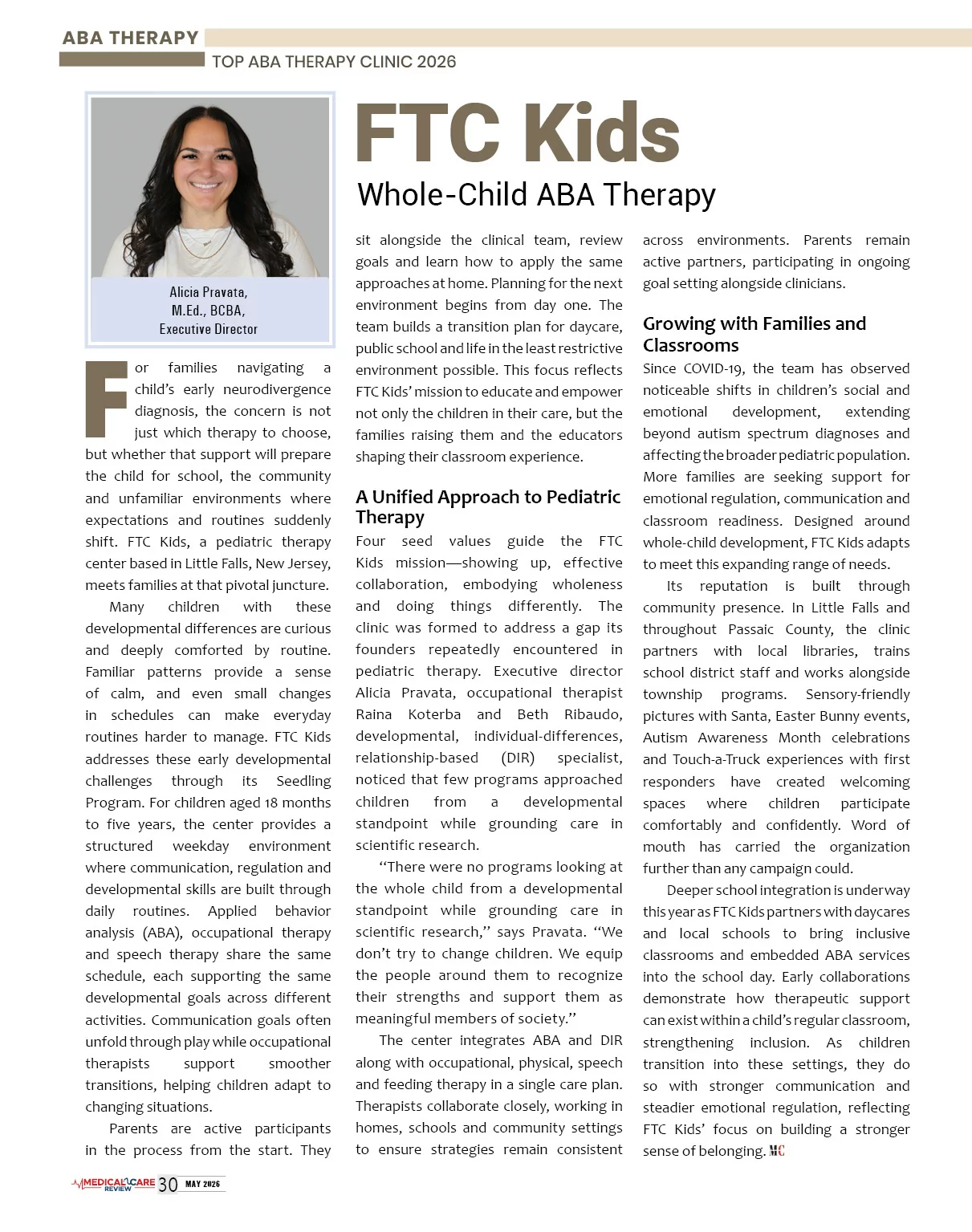
 Alicia Pravata, M.Ed., BCBA, Executive Director
What concerns do families have when choosing early neurodivergence therapy support?
For families navigating a child’s early neurodivergence diagnosis, the concern is not just which therapy to choose, but whether that support will prepare the child for school, the community and unfamiliar environments where expectations and routines suddenly shift. FTC Kids, a pediatric therapy center based in Little Falls, New Jersey, meets families at that pivotal juncture.
How does FTC Kids address routine-based developmental challenges in early childhood therapy?
Many children with these developmental differences are curious and deeply comforted by routine. Familiar patterns provide a sense of calm, and even small changes in schedules can make everyday routines harder to manage. FTC Kids addresses these early developmental challenges through its Seedling Program. For children aged 18 months to five years, the center provides a structured weekday environment where communication, regulation and developmental skills are built through daily routines. Applied behavior analysis (ABA), occupational therapy and speech therapy share the same schedule, each supporting the same developmental goals across different activities. Communication goals often unfold through play while occupational therapists support smoother transitions, helping children adapt to changing situations.
Why are parents involved in planning transitions and applying therapeutic strategies at home?
Parents are active participants in the process from the start. They sit alongside the clinical team, review goals and learn how to apply the same approaches at home. Planning for the next environment begins from day one. The team builds a transition plan for daycare, public school and life in the least restrictive environment possible. This focus reflects FTC Kids’ mission to educate and empower not only the children in their care, but the families raising them and the educators shaping their classroom experience.
A Unified Approach to Pediatric Therapy
Four seed values guide the FTC Kids mission—showing up, effective collaboration, embodying wholeness and doing things differently. The clinic was formed to address a gap its founders repeatedly encountered in pediatric therapy. Executive director Alicia Pravata, occupational therapist Raina Koterba and Beth Ribaudo, developmental, individual-differences, relationship-based (DIR) specialist, noticed that few programs approached children from a developmental standpoint while grounding care in scientific research.
“There were no programs looking at the whole child from a developmental standpoint while grounding care in scientific research,” says Pravata. “We don’t try to change children. We equip the people around them to recognize their strengths and support them as meaningful members of society.”
The center integrates ABA and DIR along with occupational, physical, speech and feeding therapy in a single care plan. Therapists collaborate closely, working in homes, schools and community settings to ensure strategies remain consistent across environments. Parents remain active partners, participating in ongoing goal setting alongside clinicians.
Growing with Families and Classrooms
In what ways has demand for pediatric therapy shifted since COVID-19 impacts?
Since COVID-19, the team has observed noticeable shifts in children’s social and emotional development, extending beyond autism spectrum diagnoses and affecting the broader pediatric population. More families are seeking support for emotional regulation, communication and classroom readiness. Designed around whole-child development, FTC Kids adapts to meet this expanding range of needs.
Deeper school integration is underway this year as FTC Kids partners with daycares and local schools to bring inclusive classrooms and embedded ABA services into the school day. Early collaborations demonstrate how therapeutic support can exist within a child’s regular classroom, strengthening inclusion. As children transition into these settings, they do so with stronger communication and steadier emotional regulation, reflecting FTC Kids’ focus on building a stronger sense of belonging.
