Thank you for Subscribing to Medical Care Review Weekly Brief


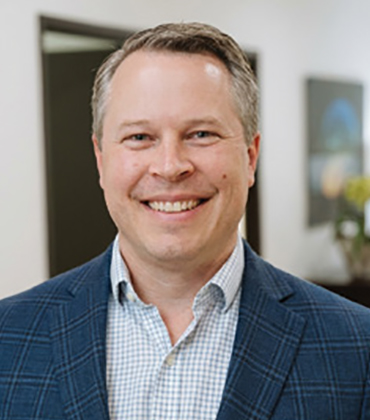 Dr. Spencer Miller, Owner & Medical Director
For Dr. Spencer Miller, Brain Treatment Center Plano began with something he saw during training in Newport Beach, California. A child with autism who had not spoken for years began to communicate. Miller was then a neurohospitalist at Baylor University Medical Center. The experience stayed with him and eventually changed the direction of his career.
“It changed my whole life,” says Miller.
The experience ultimately led Miller to partner with Wave Neuroscience to establish clinics in the Dallas area, including Brain Treatment Center Plano. His goal was to make MERT available to a local autism community that lacked access to the treatment at the time.
Miller shares ownership with Dr. Nelson Jaeggli, a physician and partner with extensive experience in emergency medicine and advanced training in transcranial magnetic stimulation. Jaeggli completed a fellowship in transcranial magnetic stimulation at Duke University School of Medicine in 2025, adding specialized expertise in brain stimulation to the practice’s clinical leadership. Today, Brain Treatment Center Plano provides personalized neurological care through MERT, EEG-based brain mapping and customized treatment approaches. The practice looks at the whole patient, considering symptoms, patient history, family observations and existing therapies alongside brain data. Miller shares ownership with Dr. Nelson Jaeggli, a physician with advanced knowledge in the field.
Every patient starts with an EEG. The recording is organized into a quantitative EEG, or QEEG, brain map that helps the team examine brain function and determine where stimulation should be directed and which frequency may be appropriate.
Reading the Brain, Then Reading It Again
The first brain map is only the beginning. Brain Treatment Center Plano repeats EEG assessments about every two weeks or after nine or ten treatments. Miller reviews the new maps to assess the patient’s response and whether the protocol needs to change. A second treatment site may be added, or the frequency may be adjusted based on the data.
Repeated measurements give the physician a way to track how the brain is responding as treatment progresses. The protocol can evolve as those responses become clearer rather than remaining fixed throughout the course of care.
Families are given a direct account of what MERT can mean. Miller says some patients experience a partial response, while others may experience very little response. For autism, MERT remains an off-label use of the technology. Families are told about its status, expected outcomes and potential side effects. Miller is also researching MERT and PTSD, with a paper forthcoming.
-
My first and foremost obligation is the safety of the patient.
Expectation-setting is also part of Miller’s role as a physician. Families are guided through what the practice has seen, what they may reasonably expect and why individual responses can differ. That conversation is particularly important for families who arrive after previous approaches have produced limited results.
Safety remains central to that process. Miller describes his role as a coach for parents and staff and a cheerleader for patients. He emphasizes the importance of accurate treatment delivery, with staff communicating regularly across clinics to ensure that care is provided safely and consistently.
However, he places the physician’s responsibility plainly: “My first and foremost obligation is the safety of the patient.”
Care Built Around the Individual
That patient-access focus continues to shape the practice. Families now travel to the clinics from places including Kenya and Australia. Some arrive after hearing about the experiences of other families who have received treatment there, creating what Miller describes as a second generation of families seeking care.
The clearest picture of the practice may come from one family’s experience. A child who initially had little verbal output, limited eye contact and difficulty with social and emotional interaction returned to the practice over three summers. MERT was used alongside diet, supplementation, speech, occupational and ABA therapy.
During the first summer, the family saw more presence, better eye contact and a few more words. By the second, people who already knew the child noticed a striking difference. By the third, the child had developed language, entered a private school and was earning high grades. Miller credits the family’s persistence and the combination of therapies rather than presenting MERT as a solitary explanation.
For Brain Treatment Center Plano, the Best Magnetic Resonance Therapy Practice 2026 recognition is rooted in how the practice puts MERT to work: brain mapping before treatment, repeated measurement, physician oversight, candid conversations and a willingness to adjust the plan as the patient changes. The technology matters, but the larger story is how carefully it is placed within a broader approach to patient care.
