Thank you for Subscribing to Medical Care Review Weekly Brief


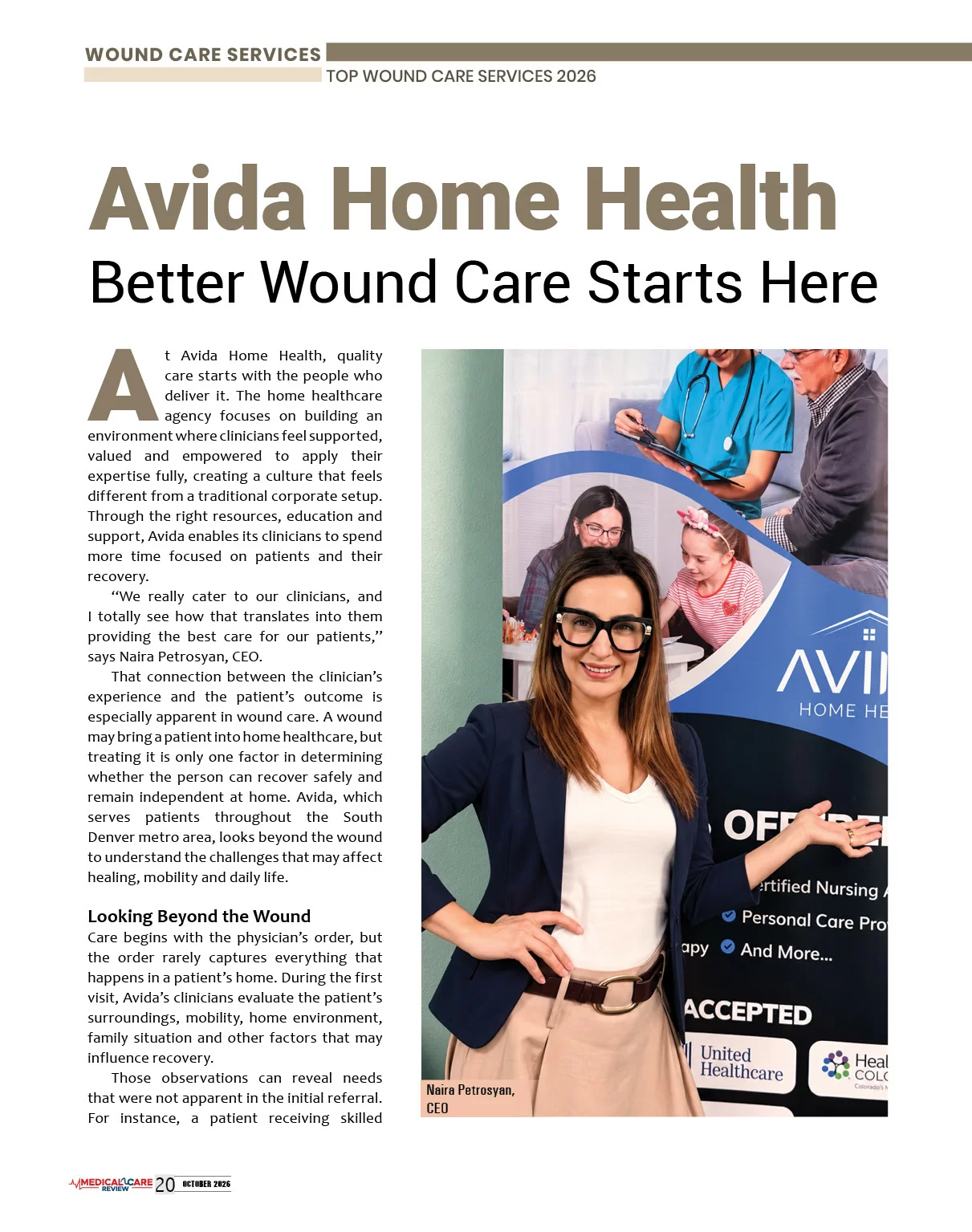
 Naira Petrosyan, CEO
At Avida Home Health, quality care starts with the people who deliver it. The home healthcare agency focuses on building an environment where clinicians feel supported, valued and empowered to apply their expertise fully, creating a culture that feels different from a traditional corporate setup. Through the right resources, education and support, Avida enables its clinicians to spend more time focused on patients and their recovery.
“We really cater to our clinicians, and I totally see how that translates into them providing the best care for our patients,” says Naira Petrosyan, CEO.
That connection between the clinician’s experience and the patient’s outcome is especially apparent in wound care. A wound may bring a patient into home healthcare, but treating it is only one factor in determining whether the person can recover safely and remain independent at home. Avida, which serves patients throughout the South Denver metro area, looks beyond the wound to understand the challenges that may affect healing, mobility and daily life.
Looking Beyond the Wound
Care begins with the physician’s order, but the order rarely captures everything that happens in a patient’s home. During the first visit, Avida’s clinicians evaluate the patient’s surroundings, mobility, home environment, family situation and other factors that may influence recovery.
Those observations can reveal needs that were not apparent in the initial referral. For instance, a patient receiving skilled nursing care for a wound may also require physical therapy, occupational therapy or, where appropriate, personal care support through Avida’s affiliated non-medical home care agency.
They can also reveal risks that have little to do with the wound itself. A patient may heal physically while still facing mobility challenges that affect their safety. If those issues are overlooked, a fall could disrupt recovery and lead to another hospital visit.
The clinician’s role, then, is not limited to treating the condition that prompted the referral. Avida’s clinicians communicate additional recommendations to providers and help coordinate appropriate services, including referrals to its affiliated non-medical home care agency when personal care support is needed, to help keep the patient progressing at home.
Preparing Clinicians for What They Will Find
That kind of work requires clinicians to know what to look for before they step through a patient’s door. Before their first patient visit, clinicians receive a detailed orientation covering potential risks and safety concerns in the home. The agency reinforces that preparation through quarterly education and additional in-services.
Avida also places particular value on keeping an open line of communication with its clinicians. Education gives them information to work from, while regular communication allows them to discuss what they encounter in the field and build confidence in their decisions.
Avida also uses AI within its electronic health system as an additional layer of checks and to help reduce routine tasks that can take time away from patients. The technology helps with the administrative side of care while leaving clinical judgment where it belongs. Communication and the relationship between caregivers and patients remain central to the way Avida works.
Helping Patients Regain Independence
For patients recovering from surgery or experiencing a fall or a new diagnosis, the goal extends beyond addressing the immediate medical issue. Avida focuses on short-term, post-acute recovery to help patients return to their previous level of functioning and continue living independently at home for as long as possible.
Reaching that point can require several forms of assistance. Nursing, therapy and personal care services may work together to address different aspects of a patient’s needs and help them move safely through their recovery.
The patient remains part of those decisions. For those who can make decisions for themselves, Avida respects their independence and supports them in determining the direction of their treatment.
A Bold New Journey
For years, Avida’s growth has followed the same relationships that define much of its work. Referrals and word of mouth have been important sources of new patients, reflecting the trust it has built through those relationships. The agency is now focusing on marketing and business development as it looks to expand its patient census and geographic reach.
As that effort takes shape, the fundamentals of Avida’s care remain the same. Giving clinicians the preparation, resources and autonomy to do their jobs well has shaped how Avida serves patients and contributed to its recognition as a Top Wound Care Services provider 2026.
For Avida Home Health, the opportunity ahead is to bring that approach to more patients, helping them receive coordinated care and regain the ability to live safely and independently at home.
What Do Wound Care Services Include for Patients Recovering at Home?
Wound Care Services cover the assessment, treatment and ongoing monitoring of wounds to support healing and reduce the risk of complications. Care may involve dressing changes, monitoring the surrounding skin, recognizing signs of infection and addressing health conditions that can delay recovery. For patients receiving treatment at home, coordinated nursing care can also help maintain continuity between visits. The care plan should reflect the wound’s condition, the patient’s medical history and the clinician’s treatment instructions.
How Does Avida Home Health Approach Complex Wound Care Needs?
Avida Home Health provides Wound Care Services for patients whose recovery may be affected by chronic wounds, diabetes, vascular problems or limited mobility. Its nurses develop individualized care plans that combine advanced wound dressings with nutritional guidance and coordinated therapy services. This approach considers factors beyond the wound itself, helping clinicians address health concerns that may interfere with healing. Physician communication and ongoing assessment also support timely adjustments when a patient’s condition or recovery needs change.
Which Factors Can Slow Wound Healing and Require Closer Monitoring?
Wound healing can be affected by poor circulation, elevated blood glucose, limited movement, nutritional concerns and other underlying conditions. Wound Care Services should account for these factors rather than focusing exclusively on the visible injury. A thorough assessment helps identify potential complications and determine whether additional clinical support is needed. Regular monitoring allows clinicians to recognize changes in the wound, review progress and communicate concerns to the appropriate healthcare professional before a problem becomes more serious.
Why Is Coordination Important in Home-Based Wound Treatment?
Effective Wound Care Services depend on clear communication among nurses, physicians and other professionals involved in a patient’s recovery. Consistent updates help keep treatment aligned with medical instructions and allow emerging concerns to be addressed promptly. Depending on individual needs, physical therapy, occupational therapy or medical social work may contribute to a broader care plan. Patients and caregivers also benefit from clear guidance about dressing care, warning signs and follow-up instructions, reducing uncertainty between scheduled visits.
What Should Patients Consider When Evaluating Wound Care Services?
Patients and families should consider whether the care team conducts comprehensive assessments, follows the treating clinician’s instructions and explains the plan in understandable terms. Wound Care Services should include appropriate monitoring, communication about changes and guidance for managing care between visits. It is also important to understand how the team coordinates with physicians and responds when healing does not progress as expected. These factors help patients evaluate whether home-based treatment can meet their clinical needs safely and consistently.
How Do Education and Follow-Up Support Recovery With Wound Care Services?
Wound Care Services extend beyond treatment during a nursing visit. Education helps patients understand their condition, follow care instructions and recognize changes that require medical attention. At Avida Home Health, patient education begins during intake and continues through home visits, printed materials, digital communication and follow-up guidance. Its clinicians also review medical history, home safety and risk factors during screening. This process helps shape individualized care plans and encourages patients to participate actively in their recovery.
