
Perimenopause and Menopause Treatment Clinics

Perimenopause and menopause treatment clinics help patients manage hormonal changes through specialized clinical care. With a focus on symptom relief, treatment personalization, health monitoring and patient education, they support smoother life transitions and improved well-being.

Remedi Health: Care Built for Complex Hormone Shifts
Remedi Health
Care Built for Complex Hormone Shifts
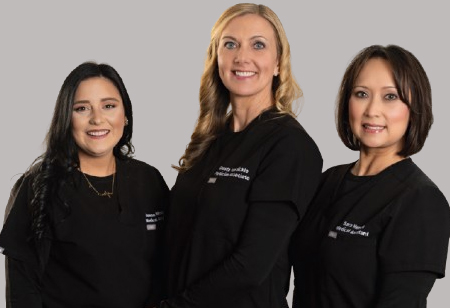
Shasta Van Sickle, PA-C, Owner
“Through my clinical experience, I have found that women often take longer to trust their provider enough to share what is really going on with their bodies. Many patients feel rushed or interrupted when trying to explain their symptoms. My approach is to give them the floor so they can fully describe any and all of their concerns,” says Shasta Van Sickle, PA-C, owner.

Empowering Women through Menopause: Advances in Treatment and Care

Perimenopause and menopause are natural stages in every woman’s life, usually beginning in their 40s. These transitions signify the shift from reproductive to non-reproductive states and can lead to various physical and emotional symptoms. As you navigate this journey, it's important to recognize that these symptoms can affect not only your well-being but also how healthcare professionals approach your care.

The Opioid Pandemic and Enhanced Recovery after Surgery: Eliminating Opioids from Routine Surgical Practice
Sinai Chicago
The Opioid Pandemic and Enhanced Recovery after Surgery: Eliminating Opioids from Routine Surgical Practice
Dr. Carlos Sandoval-Herrera, Director of Gynecology and Chief of the Division of Minimally Invasive Gynecology

Since 1999, over 900,000 people have died from opioid overuse. In 2020, over 60,000 people died from opioid misuse. Prescription opioids take the life of approximately 40 people per day and account for approximately 24 percent of opioid misuse deaths. This alarming numbers per the Centers for Disease Control should alert obstetricians and gynecologist to avoid the routine use of opioids. 

Perimenopause and Menopause Treatment Clinics Info

Q1
What Do Top Perimenopause and Menopause Treatment Clinics Help Patients Address?
Top Perimenopause and Menopause Treatment Clinics help patients understand and manage symptoms that can emerge during the menopause transition and after menopause. Care may address hot flashes, night sweats, sleep changes, vaginal symptoms, mood changes and menstrual changes during perimenopause. A thoughtful assessment considers symptoms, health history, age and treatment preferences rather than assuming every patient needs the same approach.
Q2
What Services Are Included in Perimenopause and Menopause Treatment?
Perimenopause and menopause care can include symptom evaluation, medical consultations, hormone therapy, nonhormonal treatment options, health screening and follow-up visits. Top Perimenopause and Menopause Treatment Clinics may also provide education about lifestyle factors, bone health, sexual health and other concerns that can change during midlife. Patients should understand what a treatment is intended to address, what results are realistic and when progress will be reviewed.
Q3
Why Is Demand Growing for Perimenopause and Menopause Treatment Clinics?
Demand for Top Perimenopause and Menopause Treatment Clinics is being influenced by greater awareness of menopause symptoms and persistent gaps in access to knowledgeable care. A 2026 study reported that roughly one-third of women experience uncertainty about perimenopause, with knowledge gaps and barriers to confirmation and care contributing to that uncertainty. Better public understanding is encouraging more women to discuss symptoms rather than simply accepting them as something they must endure.
Q4
How Should Patients Evaluate Top Perimenopause and Menopause Treatment Clinics?
Choosing Top Perimenopause and Menopause Treatment Clinics requires looking at clinician experience, assessment methods, treatment options, follow-up and how clearly benefits and risks are explained. Patients can describe their main symptoms and ask what the clinician would investigate before recommending treatment. It is also useful to ask what happens if the first approach does not help. A good plan should allow for reassessment and adjustment rather than treating the initial recommendation as permanent.
Q5
What Value Can Perimenopause and Menopause Treatment Provide?
Top Perimenopause and Menopause Treatment Clinics can help patients find practical ways to manage symptoms that interfere with sleep, work, relationships or everyday comfort. Hormone therapy can be an effective option for appropriate patients, particularly for bothersome hot flashes and night sweats, while nonhormonal approaches may suit others. The benefits and risks vary according to medical history and treatment choice, so care should focus on an individual assessment rather than a universal prescription.
Q6
What Role Do Medical Expertise and Technology Play in Menopause Care?
Medical expertise remains central to Top Perimenopause and Menopause Treatment Clinics because menopause care involves interpreting symptoms alongside medical history, treatment goals and changing health circumstances. Technology can support electronic records, laboratory work, telehealth and symptom tracking, but it does not replace clinical judgment. Current professional guidance emphasizes individualized evaluation and ongoing review, particularly when hormone therapy is being considered.